

Five days in Cairo and Luxor, built for wheelchair users. Not “accessible” as a marketing word — actually accessible. We use wheelchair-accessible vans with ramps or lifts, hotels with roll-in showers, and a guide trained to work with mobility limitations. Not the same itinerary as everyone else with a bigger car.
Two days in Cairo (Pyramids + Grand Egyptian Museum). Two days in Luxor (Karnak, Luxor Temple, and the accessible parts of the West Bank). One flight down, one flight back.
We’re honest about what works and what doesn’t. The Valley of the Kings and Hatshepsut’s upper terraces are NOT wheelchair accessible. We take you to the viewpoint and the visitor center, and you see them from there. Any tour that tells you otherwise is lying.
What you actually see
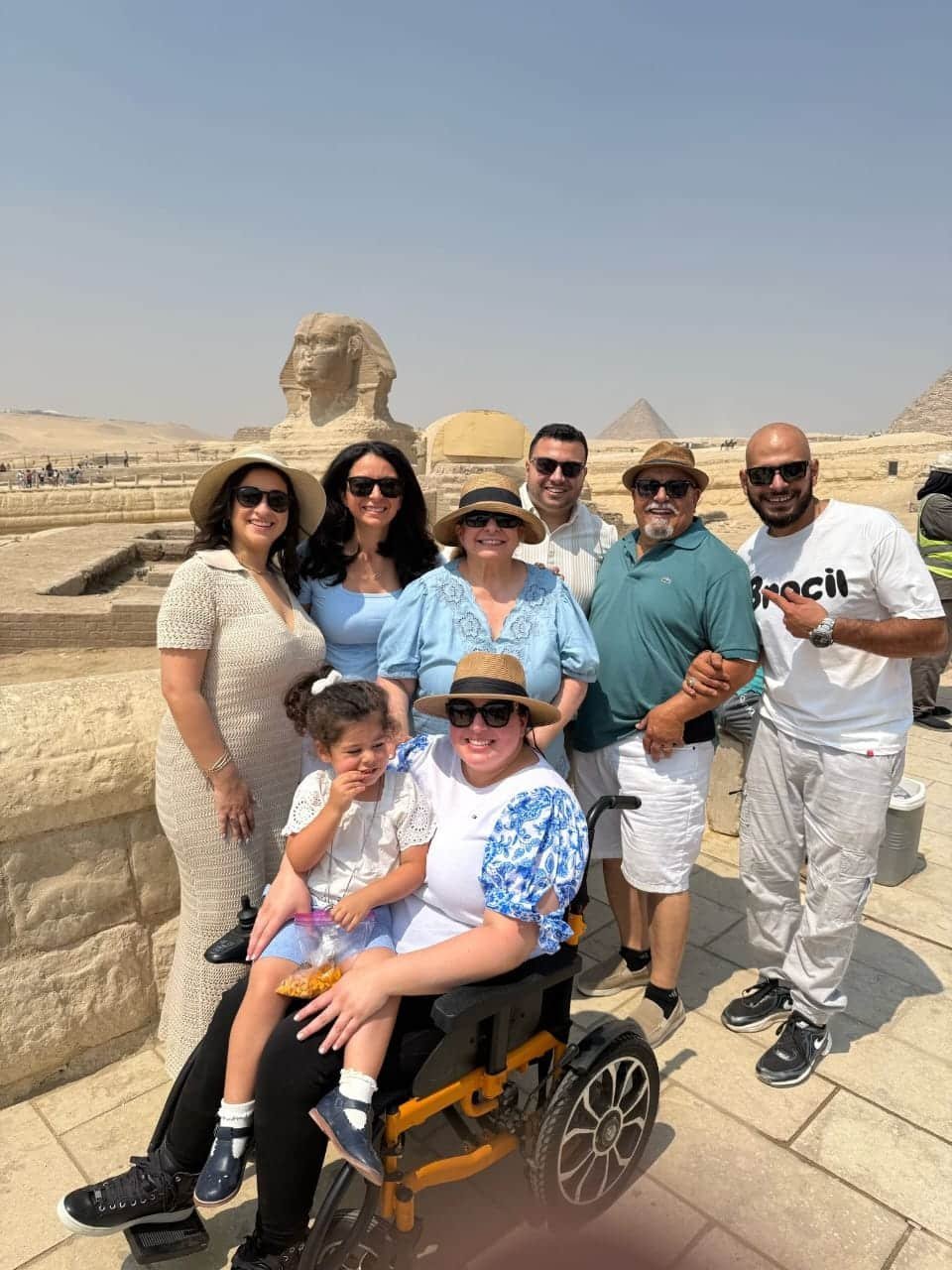
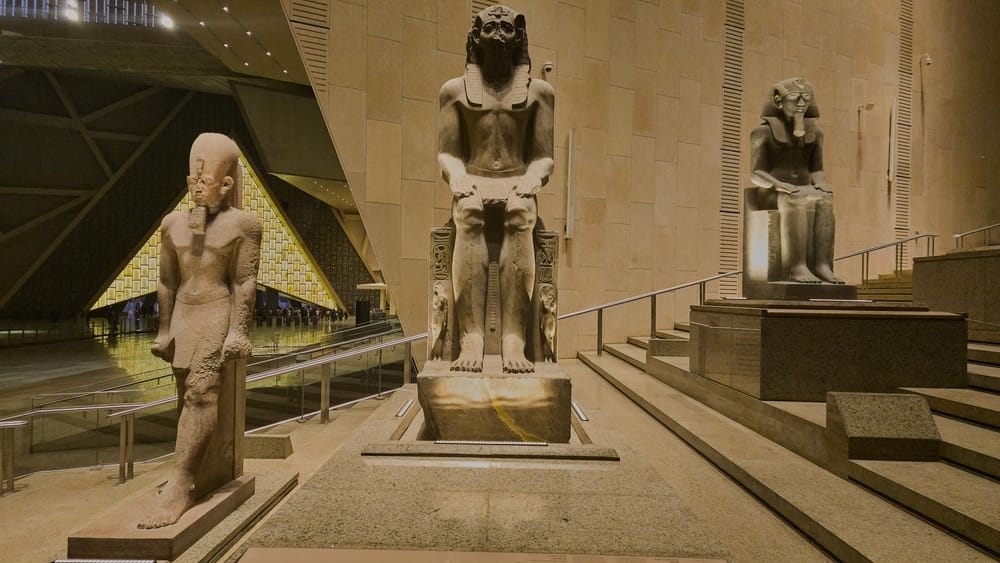
Cairo — Days 1-2. Day 1 is arrival and rest. Day 2 covers Giza Plateau (paved viewing platform + Sphinx area + Valley Temple view from above) and the Grand Egyptian Museum (GEM) — fully wheelchair accessible, with elevators, ramps, and accessible restrooms on every floor.
Luxor — Days 3-5. Day 3: fly to Luxor, then Karnak Temple in the afternoon (main paths and Hypostyle Hall are paved and accessible). Day 4: West Bank — Colossi of Memnon (viewable from the road), Hatshepsut’s Temple (lower terrace accessible, upper terraces are not), and the Valley of the Kings viewpoint (interior tombs are NOT wheelchair accessible). Day 5: Luxor Museum (fully accessible) before the flight back to Cairo.
What’s actually accessible (and how)
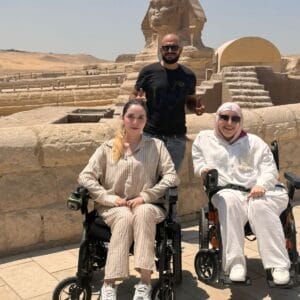
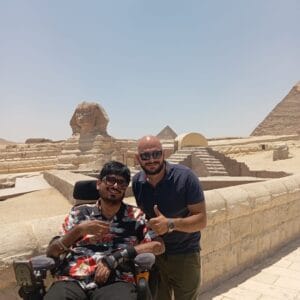
Giza Plateau. There’s a paved viewing platform on the east side with a clear view of all three pyramids. The Sphinx area has a paved path with a ramp to the viewing area. The Valley Temple involves stairs — you can view it from the upper level, which gives a good perspective of the structure. A wheelchair-accessible restroom is near the main entrance.
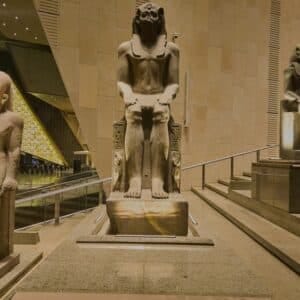
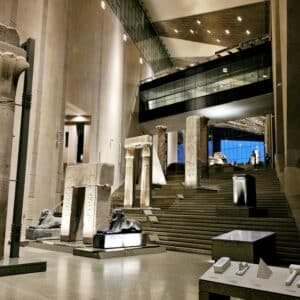
Grand Egyptian Museum (GEM). Fully accessible. Elevators to every gallery level, ramps between sections, accessible restrooms on every floor. Wide corridors. The Tutankhamun galleries and the grand staircase are all reachable. Wheelchairs are available at the entrance if you don’t bring your own.
Karnak Temple. Most of the main tourist path is paved and flat. The Hypostyle Hall has a paved floor, but a few of the side chapels have steps. The Sacred Lake is reachable via a long paved path. The sound and light show evening event has an accessible section.
Luxor Temple. Paved throughout the main areas. A ramp leads from the entrance to the Colonnade Hall. The inner sanctuary has a few steps — viewable from the outer court.
Luxor Museum. Fully accessible. Ramp at the entrance, elevator between floors, wide galleries. One of the best small museums in Egypt, and you can actually see everything from a wheelchair.
Colossi of Memnon. Paved parking area with a paved viewing spot. No entry needed. 15-minute stop.
Hatshepsut’s Temple. The lower terrace (first colonnade) is reachable via a ramp. The upper terraces have stairs only. You see the lower terrace and the cliff face behind it, which is the money shot anyway.
Valley of the Kings. NOT wheelchair accessible inside the tombs. The path from the visitor center to the tombs is steep and narrow. Tomb entrances are tight and involve stairs or steep ramps. What we do instead: drive to the viewpoint over the valley, then a stop at the visitor center for the 3D model and the replica tombs (if open). If you’re partially mobile and can transfer, we can arrange a tuf-tuf to the closest tombs — but the interiors are still on you.
What we skip (and why)
Inside the Great Pyramid at Giza. Tight, low, steep, no air flow. Not accessible. Not worth it for anyone with mobility limitations.
Inside the tombs at the Valley of the Kings. Same reason as above. Even walking visitors find them difficult. View from the viewpoint is the practical option.
Old Cairo (Coptic Cairo) and Khan el-Khalili. Narrow streets, uneven paving, no consistent ramps. Skip these for a Cairo-focused accessible itinerary. If you specifically want Old Cairo, we can arrange a shorter visit focused only on the Hanging Church (which has a ramp).
The Citadel of Saladin. The Alabaster Mosque has steps at the entrance. The terrace has uneven paving. Skippable unless you want the view — we can arrange a stop at the parking lot for the view without going into the mosque.
The hotels
Steigenberger Pyramids (Cairo, 2 nights). 5-star. Accessible rooms with roll-in showers, grab bars, and widened doorways. Elevators to all floors. Pool has a lift chair (ask at the front desk). 10 minutes from the Giza plateau.
Steigenberger Nile Palace (Luxor, 2 nights). 5-star on the Nile corniche. Accessible rooms with roll-in showers. Elevators to all floors. Walking distance (via paved paths) to Luxor Temple. Pool has a lift chair.
About the flight
Round-trip Cairo ↔ Luxor on EgyptAir, economy class. Luggage: 23 kg checked, 7 kg carry-on per person. Wheelchair handling is coordinated through EgyptAir Special Assistance — we file the paperwork for you. Tell us your wheelchair type (manual, power, dimensions) at booking, and we confirm with the airline.
Important note on pricing: The $1,500 base price is based on double occupancy in low season (May-September). Peak season (October-April) is $1,700-1,900 per person. Flight prices also change — booked 3+ months out, the flights total about $200-260 per person. Last-minute (under 3 weeks), they can reach $450-550 per person. We’ll quote you the exact price before confirming. We don’t markup flights — you pay what EgyptAir charges.
About our accessible vehicles
All transport in Cairo and Luxor is in a wheelchair-accessible van with either a rear ramp or a side lift. Vans have tie-downs for two wheelchairs and seating for 4-6 companions. We assign a driver who has experience with wheelchair users.
If you use a power wheelchair, tell us the dimensions and weight at booking. Our standard vans accommodate most power chairs, but we need to confirm before arrival.
About your guide
Our accessible tour guide is trained on mobility assistance. They know where the ramps are, where the accessible restrooms are, and which paths actually work. They also know when to slow down and when to step back. If you need physical assistance (transfers, pushing), tell us in advance and we assign the right guide.
What’s included
- 2 nights at Steigenberger Pyramids (Cairo) — accessible room
- 2 nights at Steigenberger Nile Palace (Luxor) — accessible room
- Round-trip Cairo-Luxor flights (economy, wheelchair handling coordinated)
- Wheelchair-accessible van with ramp or lift (Cairo and Luxor)
- Daily breakfast
- Lunch on all tour days
- All entrance fees (Giza Plateau, GEM, Karnak, Luxor Temple, Luxor Museum, West Bank stops)
- English-speaking guide trained for accessible touring
- Airport transfers in Cairo and Luxor
- Bottled water during tours
What’s not included
- International flights
- Visa ($25 on arrival for most nationalities)
- Dinner
- Tips for guide and driver ($10-15 per person per day)
- Personal care attendant (if you travel with one, we can arrange)
- Wheelchair rental in Egypt (bring your own)
- Travel insurance (get one that covers pre-existing conditions and mobility equipment)
Honest notes
Egypt is not a wheelchair-friendly country in general. Sidewalks are uneven, ramps are rare, and accessible restrooms are limited outside 5-star hotels. What we do is pick the sites and paths that work, use accessible vans, and keep the itinerary realistic. We do NOT promise full access at every stop.
The Valley of the Kings is not accessible inside. You will see it from the viewpoint and the visitor center. If this is a deal-breaker, Luxor is not the right destination — but the rest of the Luxor itinerary (Karnak, Luxor Temple, Luxor Museum, Colossi of Memnon, Hatshepsut lower terrace) is very doable.
Bathrooms. Accessible restrooms are reliable at the GEM, the Steigenberger hotels, and the Luxor Museum. At Karnak, there’s a wheelchair-accessible restroom near the main gate. At Giza, there’s one near the entrance. Between sites, we use hotel restrooms. Plan accordingly.
Heat. October to April is best. Summer (May-September) is 40°C+ in Luxor. Heat intolerance is a real issue for many wheelchair users. If you come in summer, we start at 6 AM and finish by 11 AM.
Transfers from wheelchair to car seat. Some travelers prefer to stay in their wheelchair in the van (tie-downs). Others prefer to transfer to a car seat. Tell us which one you prefer when booking, so we assign the right vehicle.
Accessible room specifics. Both hotels have roll-in showers, grab bars, and widened doorways. We confirm the specific room number with the hotel 2 weeks before arrival and send you photos. If the room doesn’t meet your needs, we switch hotels — but there aren’t many accessible 5-star options in either city, so we need to know in advance.
Who this is for
- Wheelchair users who want to see the Pyramids, GEM, Karnak, and Luxor Temple
- Travelers with limited mobility (walkers, canes, limited stamina)
- People who travel with a companion or personal care attendant
- Older travelers who want a realistic, not rushed, itinerary
Who this is not for
- Travelers who want to enter the Valley of the Kings tombs (not accessible)
- Anyone who wants a fast-paced itinerary with 6+ stops per day
- Travelers who don’t disclose mobility needs before booking (we need to plan)
- Budget travelers — accessible vans and accessible rooms cost more

Reviews
There are no reviews yet.