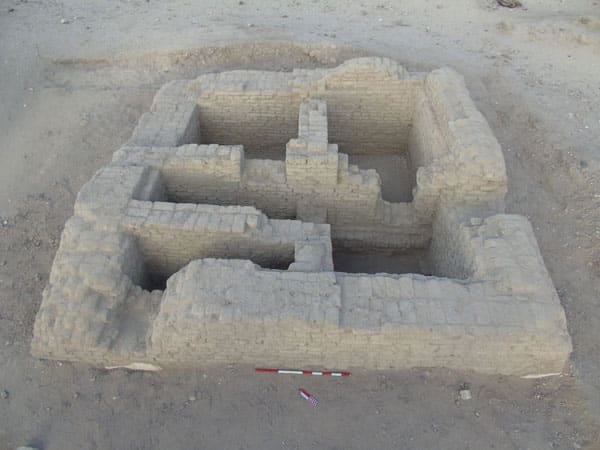
The discovery: a Byzantine monastery under the desert
An Egyptian archaeological mission from the Supreme Council of Antiquities has uncovered the remains of an integrated Byzantine‑era monastic complex in the Sohag desert of Upper Egypt. The discovery was made in an area already known for early Christian sites, reinforcing the idea that Sohag was a vibrant center of monastic life between Late Antiquity and the early Byzantine period.
Preliminary reports indicate that the complex dates roughly between the 5th and 7th centuries CE, a time when monastic communities flourished in Egypt’s desert margins. This period saw monks choosing remote but connected locations, close enough to the Nile Valley to obtain supplies yet far enough into the desert to preserve the quiet needed for prayer and contemplation.
Layout of the monastic complex
Archaeologists describe the site as a multi‑unit complex including churches, monks’ living quarters, service rooms, and open courtyards. Built largely of mudbrick with some stone elements, the monastery follows a practical layout that reflects both the harsh desert environment and the communal nature of monastic life.
One part of the complex includes a church with an apse, possibly with a small sanctuary and side rooms attached to it. Nearby, a network of cells and residential units shows where monks slept, prayed privately, and stored their few belongings, with some rooms featuring niches, benches, or simple plastered walls.
Evidence of daily life: inscriptions and finds
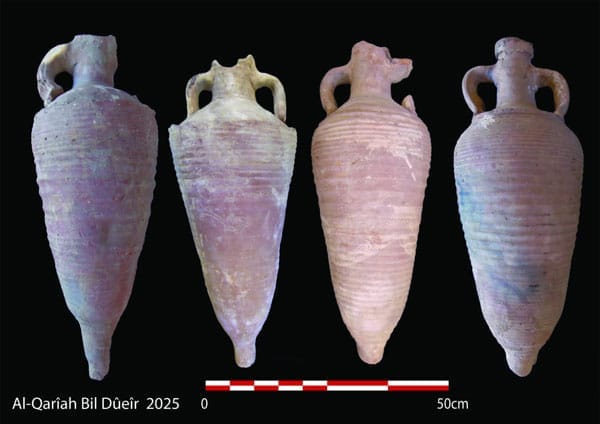
Beyond walls and floors, the most striking aspect of the discovery is the material evidence of the monks’ daily routines. Excavators have reported ceramic fragments, storage jars, and cooking installations that point to a modest but organized communal kitchen and food storage system.
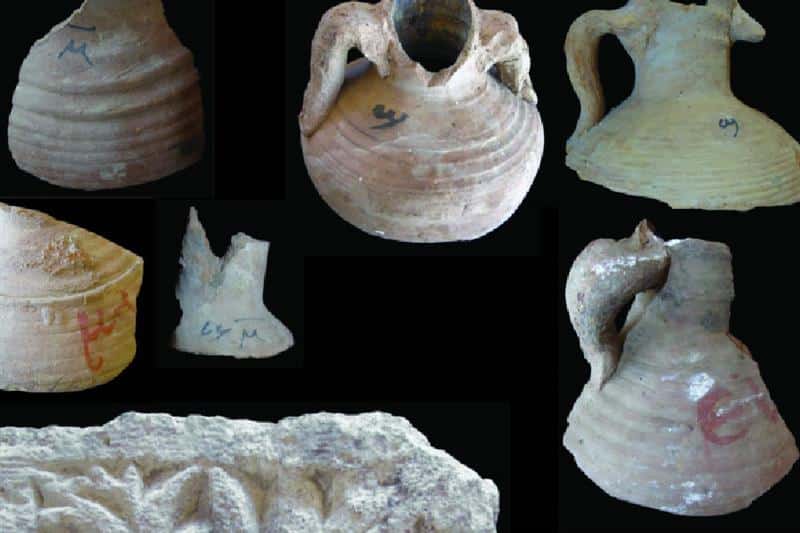
Several sources mention inscriptions and graffiti in Greek and Coptic on plastered surfaces or pottery sherds, including crosses and short devotional texts. Such inscriptions help date the site more precisely and offer insights into the language and spiritual culture of the community that lived there.
Sohag as a center of Christian monasticism
This new Byzantine‑era complex does not stand in isolation: Sohag is already famous for the White Monastery (Deir Anba Shenoute) and the Red Monastery (Deir Anba Bishoi), two of Egypt’s most important late antique monastic centers. The discovery suggests that the region hosted not just one or two major monasteries but a full landscape of big and small communities spread across the desert edge.
Byzantine‑period monasticism in Upper Egypt played a key role in shaping Christian theology, liturgy, and spiritual practices that later spread across the Mediterranean world. Monks in places like Sohag combined intense spiritual discipline with practical work, copying texts, managing land, and interacting occasionally with lay visitors and pilgrims.
Archaeological significance of the Sohag complex
From an archaeological point of view, the Sohag complex is valuable because it appears relatively complete, offering a “snapshot” of a functioning monastery rather than isolated buildings. Studying the architecture, pottery, and inscriptions together allows researchers to reconstruct how space was organized between liturgical, residential, and economic activities.
The discovery also contributes to broader debates about how monasticism evolved from more isolated hermitages to larger, more structured communities. The Sohag complex seems to represent an intermediate model: still remote, but planned around shared churches, courtyards, and service rooms that indicate a strong communal life.
Christian and interfaith heritage in Upper Egypt
For modern visitors, this discovery highlights the depth of Egypt’s Christian heritage alongside its ancient temples and Islamic monuments. Upper Egypt is one of the regions where layers of Pharaonic, Coptic, Byzantine, and Islamic history lie remarkably close to each other along the same stretch of the Nile.
Pilgrims and culturally interested travelers can trace routes that start with ancient Egyptian sites, continue through early Christian monasteries, and reach later mosques and Sufi lodges, all within a few hours’ drive. This layered heritage makes Sohag and neighboring governorates ideal for visitors who want to understand how Egypt’s religious map developed over centuries.
Visiting Sohag: monasteries, Nile views, and local life
Sohag remains a quieter destination than Luxor or Aswan, which makes it attractive for guests seeking a more contemplative atmosphere. The famous White and Red Monasteries, with their impressive architecture and rich wall paintings, are already key stops for Christian pilgrims and history lovers.
As the newly discovered Byzantine complex is studied, conserved, and potentially prepared for visits, Sohag can position itself as a major node on Christian heritage routes in Egypt. Combined with Nile‑side villages, local markets, and traditional Upper Egyptian hospitality, the region offers a complete experience that mixes spirituality, culture, and landscape.
How this discovery can fit into tours
For travel planning, the Sohag Byzantine complex can be integrated into longer Upper Egypt itineraries, not visited in isolation. A typical route could link Cairo to Sohag by train or domestic flight, then continue south to Luxor and Aswan, connecting Christian and Pharaonic sites along the way.
Within Sohag, an ideal day might include the new monastic site (once accessible), a visit to the White Monastery, the Red Monastery, and stops in nearby villages for local food and handicrafts. For Christian groups, spiritual moments such as prayers or reflections can be arranged in consultation with local clergy and authorities where appropriate.
My Egypt Travel’s heritage‑focused and faith‑sensitive tours
My Egypt Travel can use this discovery to create specialized Christian heritage and mixed‑heritage itineraries while maintaining a respectful, faith‑sensitive approach for all guests. Tours can be tailored for Christian pilgrims, interfaith groups, or culturally curious travelers who want to see monasteries, churches, mosques, and ancient temples in one coherent narrative.
Because the agency already focuses on respectful, value‑driven travel, itineraries can be timed around church services, quiet hours at monasteries, and appropriate dress codes and photography rules. For Muslim guests on halal tours, Christian sites like the Sohag monastery can be presented as part of Egypt’s wider religious mosaic, combined with mosque visits and halal dining throughout the journey.
Sample itinerary ideas including Sohag
One sample itinerary could be a “Upper Egypt Christian Heritage Trail” starting in Cairo with key churches, moving to Sohag for the Byzantine complex and the White and Red Monasteries, then continuing to Luxor for early Christian remains and major Pharaonic temples. Another option is a “Multi‑Faith Upper Egypt Journey” that weaves the new monastic discovery with mosques in Sohag and Luxor, plus classic sites like Karnak, Hatshepsut’s temple, and the Valley of the Kings.
For guests with more time, these itineraries can extend to Aswan, including Old Nubian villages, historic churches, and mosques, creating a complete north‑south route along the Nile. Throughout, My Egypt Travel can handle logistics, knowledgeable local guides, and customized pacing for older visitors, families, or groups with specific spiritual needs.
Turning news into meaningful journeys
The unearthing of a Byzantine‑era monastic complex in Sohag is not only an archaeological headline; it is an invitation to walk in the footsteps of early monks who sought silence, faith, and community in the Egyptian desert. By connecting this new site with the broader Christian and multi‑religious heritage of Upper Egypt, travelers can experience a deeper, more layered understanding of Egypt’s identity.
With carefully designed heritage and faith‑sensitive tours, My Egypt Travel can help guests move beyond museum glass and temple walls to encounter living communities, active monasteries, and quiet desert landscapes shaped by centuries of prayer and history. Travelers interested in this new discovery can start planning their Upper Egypt journey now, ready to include Sohag’s Byzantine monastery once it opens to visitors under the guidance of Egyptian authorities.