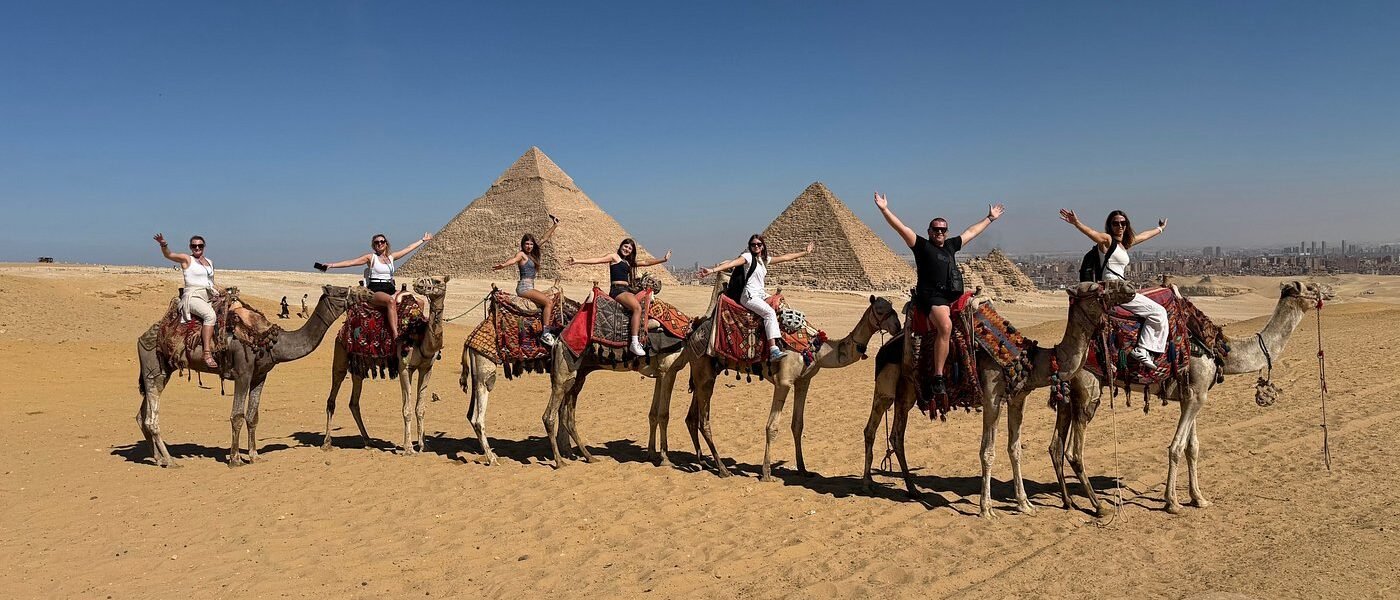
You’ve seen the photo a million times. The three triangles, the camel, the guy in the linen shirt doing a goofy pose. The Giza Plateau is, without question, one of the most photographed places on Earth. And yet, almost everyone who visits does the exact same thing: they park, they walk around the Great Pyramid, they gawk at the Sphinx, they buy a fridge magnet, and they leave. The whole affair takes maybe two hours.
But here’s the thing that the tour buses don’t tell you. The plateau is enormous. It is not just a trio of pyramids sitting in isolation. It is a sprawling, ancient city of the dead, packed with tombs, temples, causeways, and quiet corners that see almost no foot traffic. If you’re willing to walk a little further, look a little closer, and ignore the guy shouting “hurry, hurry, good price,” you’ll find a version of Giza that feels almost private. These are the hidden gems of the Giza Pyramids—the secret tombs and overlooked sites that are, honestly, just as fascinating as the big triangles themselves.
The Tomb That Most People Miss (And Shouldn’t)
Let’s start with the one that is, arguably, the most beautiful spot on the entire plateau. Tucked away behind the Great Pyramid, a short five-minute walk from the crowds, sits the tomb of Queen Meresankh III. If you only have time for one detour, make it this one.
Meresankh was royalty with a capital R. She was the granddaughter of Khufu (the guy who built the Great Pyramid) and the wife of Khafre (her uncle, because ancient Egyptian family trees are a tangled mess). Her tomb is a rock-cut chapel, and the moment you step inside, the noise of the modern world just vanishes. The walls are covered in painted reliefs that look like they were finished yesterday. We’re talking vivid reds, greens, and yellows, showing scenes of daily life—boating, fishing, craftsmen at work—alongside intricate hieroglyphics.
The showstopper, though, is on the north wall. Ten female figures stand in a row, carved directly into the rock, each one a masterpiece of Old Kingdom sculpture. It’s eerie, quiet, and shockingly well-preserved. The catch? This place is not always open. The door is often padlocked, and you might have to track down a guardian to let you in. It can be a hassle, and yes, a tip is usually expected. But standing alone in that chamber, with the painted eyes of ancient queens looking down at you, is worth every bit of the hassle.
The Whispering Tomb of Qar
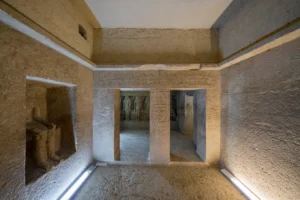
Just a stone’s throw from Meresankh, in the Eastern Cemetery, is another gem that flies completely under the radar: the Tomb of Qar. Qar wasn’t a pharaoh or a queen. He was a bureaucrat, a high-ranking official during the Sixth Dynasty, responsible for maintaining the pyramid complexes of Khufu and Menkaure long after they were built.
You might walk right past the entrance if you’re not looking. There’s no grand sign, no tout waving you in. But down the steps, you’ll find a chamber lined with carved statues and hieroglyphs that are still sharp and legible. The really strange part? There’s a side chamber where, if you stand in the middle and hum, the sound reverberates in a way that feels almost supernatural. Archaeologists aren’t sure if the ancient builders designed it that way on purpose or if it’s just a happy accident of the rock.
Next door to Qar is a smaller, unlabeled tomb that is said to belong to the son of one of the pyramid engineers. It’s a quiet, unassuming little space, but it’s a poignant reminder that behind these colossal monuments were real people—families, workers, and the minds who figured out how to stack two million blocks of stone.
The Grid of the Forgotten: The Western Cemetery
Now, let’s head to the other side of the Great Pyramid. To the west lies the Western Cemetery, and if you turn right instead of left when you enter the main gate, you’ll leave about ninety percent of the tourists behind.
This isn’t a single tomb; it’s a whole neighborhood. The Western Cemetery is a vast, ordered grid of mastabas—flat-roofed ancient tombs—belonging to nobles, priests, and court officials. It’s laid out like a modern city block, with streets and alleys separating the tombs. Most of them are locked behind gates, but you can still peer through the bars and catch glimpses of carvings and hieroglyphs that have survived for over four thousand years.
A few of these tombs have been restored and opened to the public in recent years. Look for the tomb of Duenre, a prince and vizier, which has been cleaned up and made accessible. Or keep an eye out for the mastaba of Imeri, a priest of Khufu. His tomb is famous for its colorful scenes of everyday craftsmen—carpenters, sculptors, and goldsmiths—giving you a rare look at the working class of the pyramid age.
The best part about the Western Cemetery is the silence. You can spend an hour wandering between these ancient stone boxes, with the Great Pyramid looming over your shoulder, and not hear a single selfie stick click.
The Workers Who Built the Impossible
For a long time, the story was that the pyramids were built by slaves. That myth has been thoroughly debunked, and the evidence is literally buried in the sand south of the Sphinx. The South Field contains the tombs of the actual pyramid builders—the laborers, the overseers, the people who did the backbreaking work.
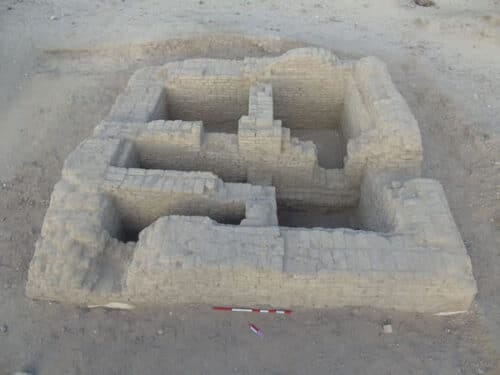
These aren’t grand monuments. They’re modest mud-brick and limestone mastabas, some with simple domed roofs. But what they reveal is extraordinary. The presence of these tombs, right next to the royal pyramids, tells us that these workers were not disposable. They were respected. They were fed, housed, and buried with dignity near their king. Some of the tombs even have small niches for offerings, suggesting that their families continued to visit and honor them long after they died.
Standing in this quiet, dusty field, you get a completely different perspective on Giza. It’s not just a monument to the ego of a pharaoh. It’s a monument to human organization, to the sheer will of thousands of ordinary people working together.
The Sphinx Enclosure and the Shadowy Underworld
The Sphinx itself is always crowded, but the enclosure around it—the hollowed-out ditch where the monument sits—has its own secrets. You’ll notice shafts and holes cut into the rock, like the infamous “Perring’s Hole,” a shaft drilled into the Sphinx’s backside by a nineteenth-century explorer.
But the real mystery lies beneath the plateau. Over the years, explorers and researchers have claimed to find evidence of a vast network of natural caves and man-made tunnels running under the Giza Plateau. Some call it the “Duat,” the ancient Egyptian underworld. British explorer Andrew Collins claims to have found an entrance to this cave system near the “Tomb of the Birds,” and he believes it connects to hidden chambers beneath the pyramids themselves.
Now, I’m not here to sell you conspiracy theories. Much of this remains unproven and highly debated. But the idea that Giza is honeycombed with unseen passages is fascinating, and it adds a layer of mystery to a site that we think we already know everything about.
A Few Practical Truths Before You Go
Two things will make or break a day spent wandering rather than queueing: knowing which gate to enter the plateau from, and knowing what time of year to come. There is almost no shade out there, and the difference between an 8 AM start and a 1 PM start is the difference between a good day and a heatstroke.
Look, visiting these hidden spots isn’t always a walk in the park. Egypt is a country where things are, shall we say, flexible. Tombs open and close without notice. Guardians disappear for lunch. A “closed” sign might just mean “find the guy with the key.” Come with patience, carry small bills in Egyptian pounds for tips, and don’t be afraid to ask around. The extra effort will be rewarded with moments of absolute stillness in places that have been waiting thousands of years for someone to stop and look.
The pyramids will always be the stars of the show. But the real soul of Giza—the stories of queens, priests, workers, and forgotten officials—lives in the quiet tombs and empty cemeteries that surround them. Skip the gift shop. Walk a little further. You might just find the Egypt you came for.
And when you’re done with the dead, go and see what the museums did with them. Our guide to the ten artifacts you shouldn’t miss at the Grand Egyptian Museum picks up exactly where these tombs leave off.