What defines a traditional Egyptian breakfast
A classic Egyptian breakfast is built around simple, affordable ingredients that are naturally filling: beans, bread, vegetables, and a few protein‑rich additions like eggs or cheese. This combination gives a balance of carbohydrates, plant protein, and fiber, which explains why it has remained the standard start to the day for generations across cities and villages.
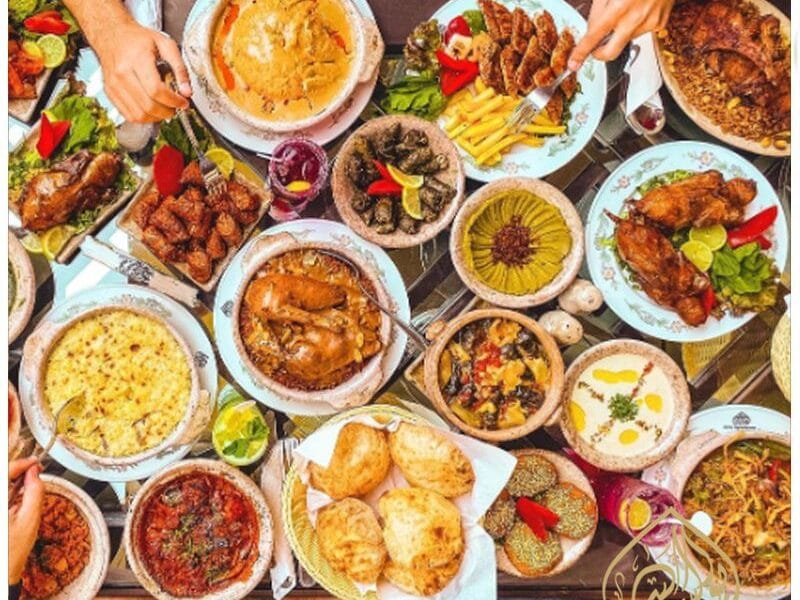
Instead of a single plated dish, breakfast is usually a shared spread placed in the middle of the table, with everyone tearing bread and assembling small bites. Families at home or friends in a small restaurant will surround bowls of ful medames, plates of ta’ameya, sliced tomatoes and cucumbers, cheese, olives, and pickles, turning the meal into a social ritual rather than just a quick bite.
In busy urban areas like Cairo and Alexandria, many people grab breakfast on the go from specialized ful and ta’ameya shops. Workers, students, and taxi drivers often line up early in the morning to buy freshly made sandwiches before heading out, making the breakfast stall a daily social hub in many neighborhoods.
Ful medames: the heart of the Egyptian morning
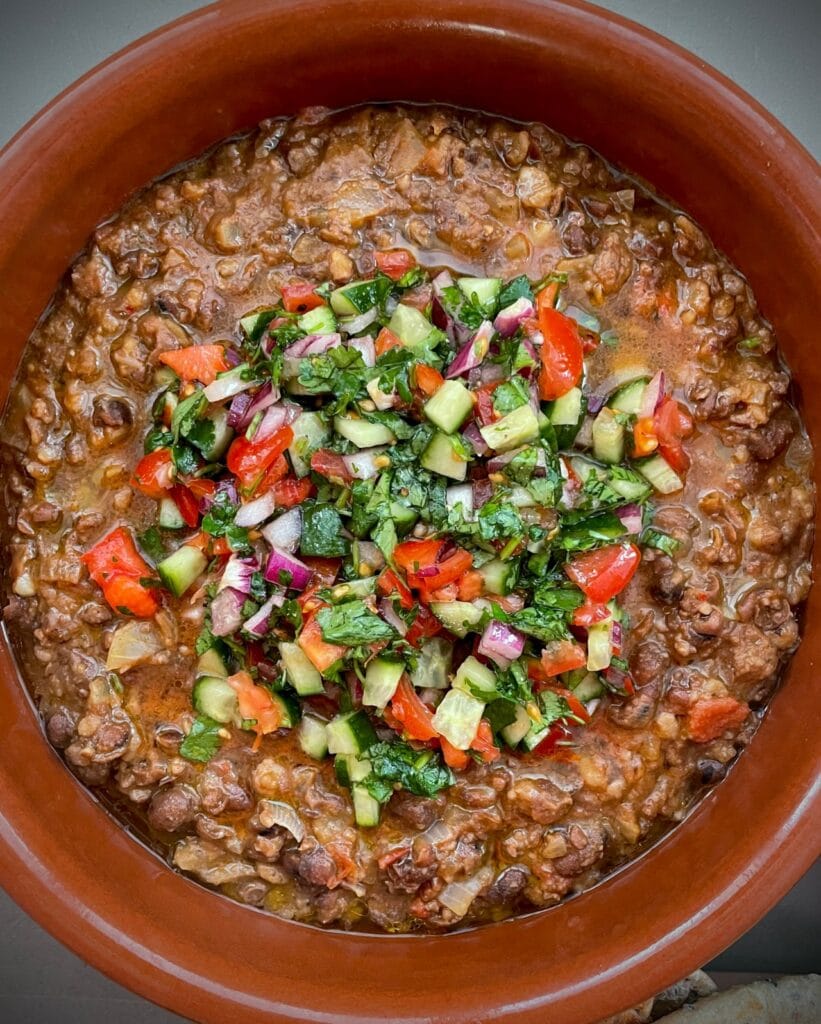
Ful medames is widely considered the national dish of Egypt and the central pillar of a traditional breakfast. The basic preparation starts with dried fava beans that are soaked and then cooked slowly, sometimes overnight, in tall metal pots known as idra or damassa until they become soft and creamy.
Once the beans are tender, they are seasoned with a variety of simple but aromatic ingredients. Common additions include garlic, lemon juice, olive oil or tahini, salt, cumin, and sometimes chili or chopped parsley, with each household and vendor having a slightly different style. Some people prefer ful lightly mashed and soupy, while others like it thicker so it sits firmly in a sandwich.
Ful can be served in several ways depending on taste and region. At home, it may be presented in a large bowl in the center of the table, with a jug of olive oil or a small dish of tahini nearby so everyone can adjust the richness. In street stalls, ful is often prepared inside a loaf of aish baladi with extra toppings like chopped onions, tomatoes, pickles, or boiled egg slices, creating a portable, filling sandwich.
Because it is inexpensive, nutritious, and long‑lasting in terms of energy, ful medames has traditionally been a breakfast for all social classes. Today, it appears everywhere—from humble carts in popular neighborhoods to hotel breakfast buffets catering to international visitors who want a taste of local life.
Ta’ameya (Egyptian falafel): crispy and herb‑packed

Ta’ameya is the second cornerstone of Egyptian breakfast and a dish that surprises many visitors familiar only with chickpea falafel. In Egypt, ta’ameya is usually made from dried fava beans that are soaked and ground with fresh herbs such as parsley, coriander, dill, and green onions, plus spices like cumin and coriander seeds.
The resulting mixture is bright green and fragrant, shaped into patties or disks, then coated in sesame seeds and deep‑fried until crisp on the outside. When you break a piece open, the inside is soft and vividly green, with a fresh herbal aroma that pairs perfectly with tahini or a simple tomato and cucumber salad.
Ta’ameya is commonly served as part of a shared breakfast platter or stuffed into aish baladi as a sandwich. Many Egyptians order “ful wa ta’ameya” together: a plate or sandwich that combines both dishes with sides like pickled vegetables and fries, giving a satisfying mix of textures and flavors in each bite.
Because it is entirely plant‑based, ta’ameya naturally fits vegetarian and vegan diets, which is one reason travelers seeking meat‑free options quickly fall in love with Egyptian breakfast. Even for locals who do eat meat, ta’ameya remains a daily favorite thanks to its affordability and comforting taste.
Aish baladi: the bread that holds it all together
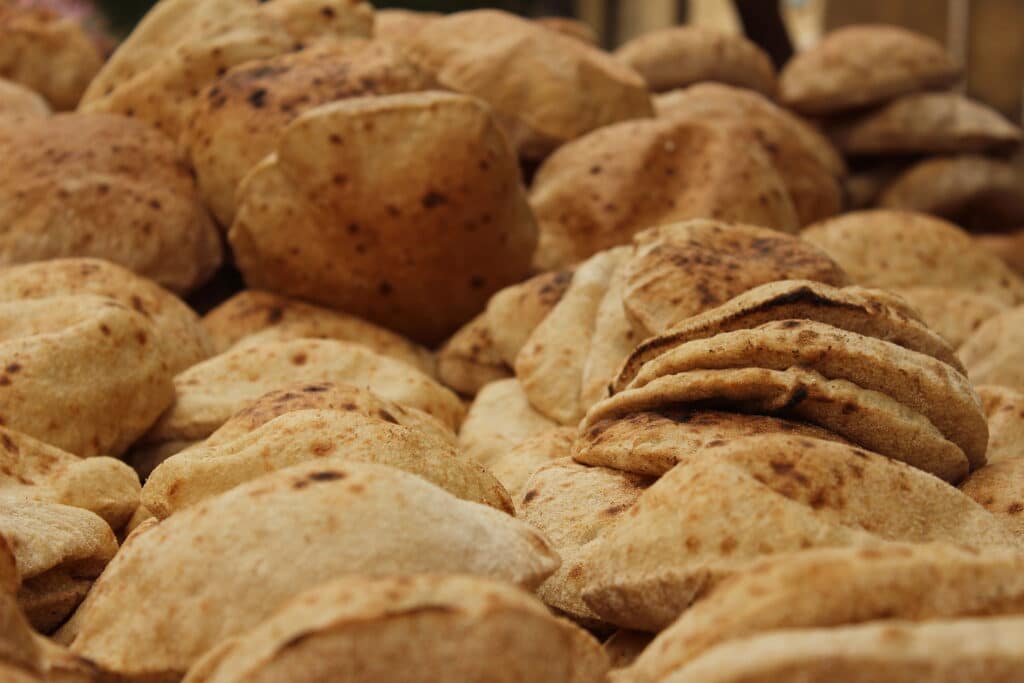
No Egyptian breakfast is complete without aish baladi, the local round whole‑wheat flatbread that has been central to Egyptian food culture since ancient times. The name “aish” itself means “life” in Egyptian Arabic, hinting at the deep cultural importance of bread as a symbol of survival and dignity.
Aish baladi is typically baked in extremely hot ovens so that the dough puffs up, forming a hollow pocket. Once it cools slightly, it collapses but retains the pocket inside, making it perfect for stuffing with ful, ta’ameya, eggs, cheese, or any combination of breakfast items. The bread has a slightly smoky aroma and a chewy texture that contrasts well with creamy beans and crispy falafel.
In most traditional breakfasts, aish baladi acts as both utensil and plate. People tear off small pieces to scoop up beans, wipe plates clean, and assemble mini‑sandwiches from the shared dishes in the middle of the table. For many Egyptians, the quality of the bread can make or break the meal, which is why bakeries start early each day to produce fresh rounds in time for breakfast.
Essential sides: vegetables, pickles, and spreads
Beyond beans, falafel, and bread, the charm of a traditional Egyptian breakfast lies in the variety of small sides that brighten and balance the meal. Fresh vegetables such as sliced tomatoes, cucumbers, green peppers, and onions are almost always present, adding crunch and juiciness to each bite.
Pickled vegetables—known as mekhalel or torshi—are another key component. These can include pickled carrots, turnips, cucumbers, hot peppers, or even pickled lemons, bringing acidity and a salty tang that cuts through the richness of beans and fried foods. A small bowl of olives often appears as well, offering a pleasantly bitter and salty contrast.
Many tables also feature tahini sauce made from sesame paste, lemon, garlic, and water, which can be drizzled over ful, ta’ameya, or vegetables. In some households and local cafés, you may find fried eggplant or potato fries served at breakfast, especially on weekends when people have more time to sit and enjoy an extended meal.
These sides are not just decoration; they give balance by introducing acidity, freshness, and variety, making every mouthful slightly different. Travelers who join a local breakfast soon see how Egyptians use these small plates to customize flavors to their own preference.
Eggs, basturma, and cheeses: extra protein and indulgence
While many Egyptian breakfasts are largely plant‑based, animal‑protein dishes are also popular, especially on weekends or when people have guests. One of the most beloved is beid bel basturma, a skillet of eggs cooked with slices of basturma—a cured, air‑dried beef seasoned with garlic, fenugreek, and spices.
Basturma has a strong, savory aroma and turns slightly crisp at the edges when fried in a bit of oil or ghee before eggs are added. The resulting dish is rich and deeply flavorful, best eaten hot with aish baladi to soak up the yolks and spices. For many families, this dish signals a more special or leisurely breakfast.
Cheese also plays a major role, especially white soft cheese similar to feta, often served plain or mixed with tomatoes, cucumbers, and herbs. This gibna mixture provides a salty, creamy element that pairs well with bread and fresh vegetables. Sometimes, room‑temperature processed cheese triangles or local rumi cheese with a sharper taste are added to the table as well.
Together, eggs, basturma, and cheese give extra protein and richness to the breakfast spread, making it even more satisfying. For visitors staying in guesthouses or with local families, these dishes often appear when hosts want to offer a generous and memorable meal.
Drinks and the rhythm of the morning
Tea and coffee are integral to traditional Egyptian breakfast and to the morning rhythm in general. Black tea, usually served in small glasses and sweetened, is the most common choice, sometimes flavored with fresh mint leaves. Many people also enjoy Turkish‑style coffee—thick, strong, and served in small cups—either with breakfast or shortly afterward.
Breakfast time in Egypt typically falls between 7:00 and 10:00 am, although workers on early shifts may eat even earlier. This time window is when bakeries and ful shops are at their busiest, with a steady flow of customers buying bread and sandwiches before work and school. For travelers, visiting a popular breakfast spot during these hours is one of the best ways to observe daily life and join the local routine.
In tourist hotels, breakfast buffets often offer a mix of international dishes and a simplified version of the traditional spread. However, many guides encourage visitors to at least once step outside the hotel and experience a small neighborhood café or ful cart to taste the real thing.
How travelers can enjoy a traditional Egyptian breakfast
For visitors to Egypt, trying a traditional breakfast is as important as seeing major sites like the Pyramids or the Egyptian Museum. In Cairo, Giza, Alexandria, and Luxor, many local eateries and casual restaurants serve ful, ta’ameya, and other classics from early morning, often at very affordable prices.
Food‑focused city tours and photography tours frequently include a breakfast stop, allowing guests to learn how to order, what to try, and how Egyptians typically combine dishes. Some operators recommend specific neighborhoods or markets where the atmosphere is especially lively in the morning, giving an added cultural dimension to the meal. Even a simple order of ful and ta’ameya, eaten among locals, can become one of a traveler’s strongest memories of Egypt.