El Alamein War Museum is the main place in Egypt to understand the North African campaign of World War II and the decisive battles fought around this small Mediterranean town. Inside, visitors move from open‑air tanks and guns into detailed halls with maps, uniforms, and personal items that bring the story of 1942 to life.
Location, Tickets and Opening Times
The museum stands a short distance inland from the Mediterranean coast, near the main road that links Alexandria with the North Coast resorts and New Alamein City. It is easy to combine with the nearby Commonwealth, Italian, and German cemeteries on the same day.
Opening hours: Daily roughly 9:00 to 16:00; the official military site lists opening all week from 9 am to 4 pm, so morning or early afternoon visits are best.
Tickets: Entry fees are modest by Egyptian museum standards; online sources note that prices are low and often included in organized tour packages, so it is best to confirm current rates locally.
Arriving early gives cooler temperatures and at least 1–2 hours to see both the outdoor displays and all main halls.
Outdoor Exhibits: Tanks, Guns and Vehicles
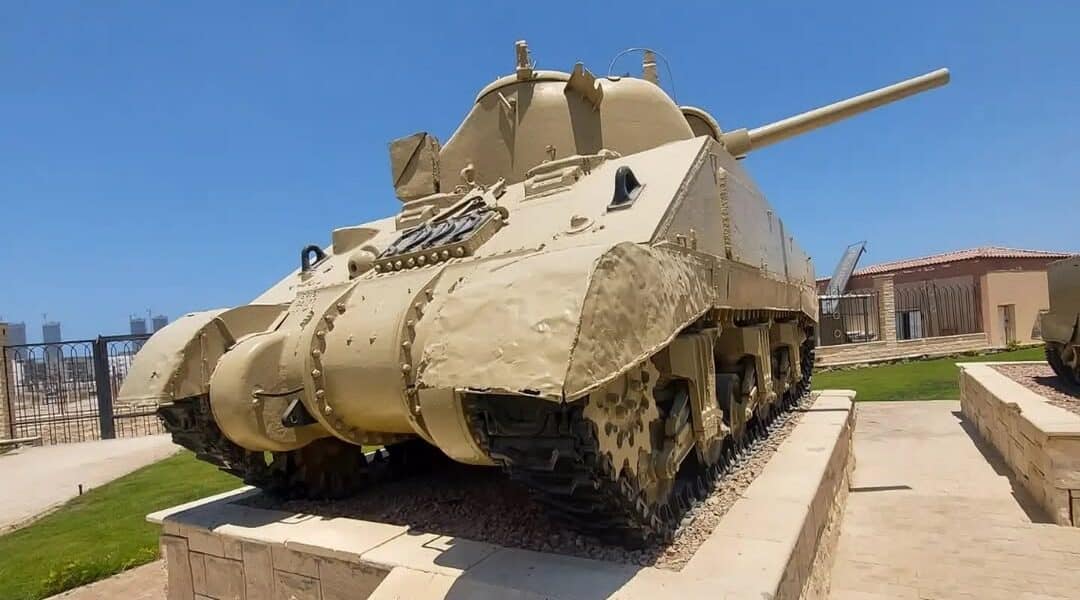
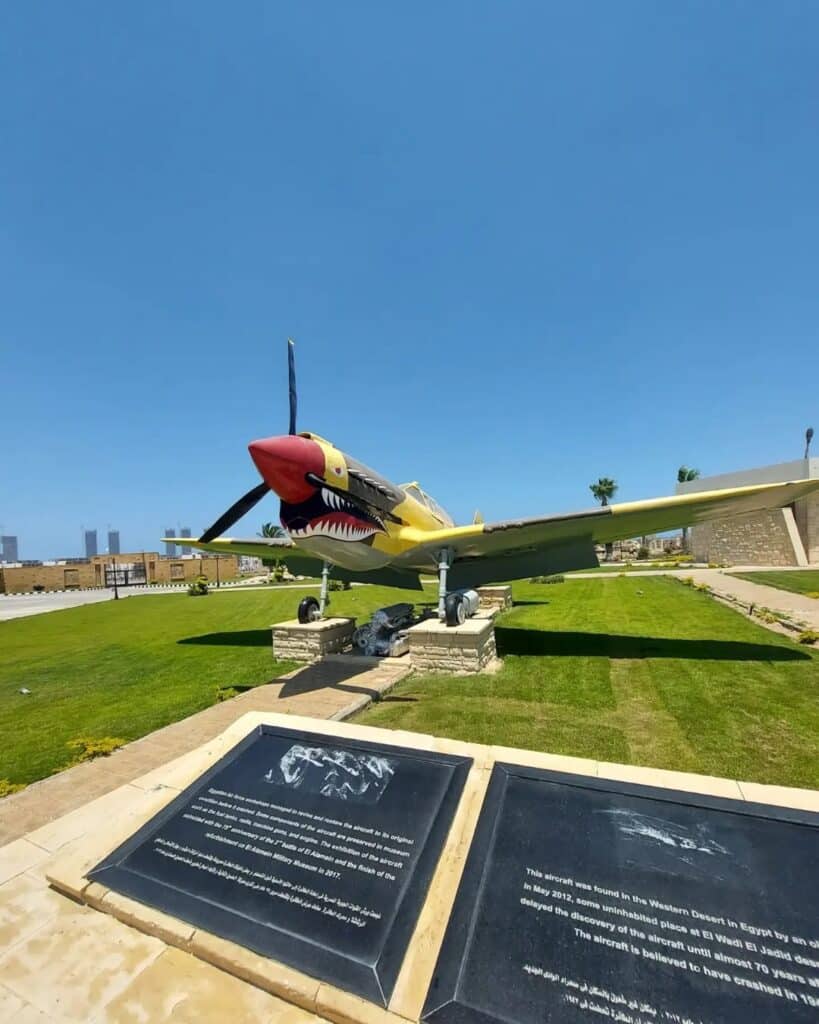
Before entering the main building, visitors walk through an open‑air showground displaying heavy weapons from both Allied and Axis forces. Cannons, anti‑tank guns, armored vehicles, troop carriers, and tanks are arranged in rows, allowing close‑up views and photos of equipment that actually operated in the Western Desert.
Some tours highlight how these vehicles were adapted for desert warfare, including extra fuel tanks, sand filters, and tracks suited to soft sand. The open space also gives a sense of the flat, exposed terrain that made El Alamein such a strategic line between the sea and the Qattara Depression.
Inside the Museum: Layout and Main Halls
The museum building is divided into several sections, typically including a mixed hall and dedicated halls for each major participant in the battle: Egypt, Britain and the Commonwealth, Germany, and Italy. Renovations completed around the 50th and later anniversaries modernized the displays with clearer storytelling and upgraded exhibition lighting.
Mixed / Common Hall: Introduces the overall North African campaign, with maps, timelines, documents, and objects from all sides together.
National halls: Each national section focuses on that army’s uniforms, insignia, weapons, field equipment, and photographs, often using life‑size mannequins to recreate soldiers at rest, in trenches, or operating radios and artillery.
Visitors follow a logical route that starts with the broader history, then moves into more detailed stories of individual forces and commanders.
What You’ll See: Exhibits and Artifacts
The collection concentrates on the material culture of the battle and the daily life of soldiers in the desert. Expect to see:
Weapons and equipment: Rifles, machine guns, grenades, artillery shells, field telephones, compasses, and desert‑adapted vehicles from both Allied and Axis armies.
Uniforms and personal items: Helmets, jackets, boots, soldiers’ eating utensils, water bottles, Bibles, and prayer books, which underline the human side of the conflict.
Maps and documents: Original or reproduced battle maps of North Africa showing troop movements, supply lines, and defensive positions along the El Alamein front.
Photographs and murals: Large wall panels and murals narrate key moments of the battle and daily life in the desert camps, sometimes accompanied by captions in Arabic, English, German, and Italian.
These details help visitors imagine the heat, dust, and logistical challenges faced by soldiers far from home.
Dioramas, Storytelling and Language
One of the museum’s most engaging features is its use of dioramas and realistic scenes to tell the story of El Alamein to non‑specialist visitors. In some rooms, mannequins represent wounded soldiers being treated, officers planning around maps, or airmen resting between missions, surrounded by original equipment.
Interpretation panels and labels are generally available in at least Arabic and English, with some information also referencing German and Italian sources. This multilingual approach reflects the international nature of the battle and makes the museum accessible to a wide range of visitors, from casual tourists to serious history enthusiasts.
Atmosphere and Visitor Experience
Although the museum contains weapons and dramatic scenes, the overall atmosphere is more educational and commemorative than sensational. Many visitors describe the experience as moving rather than purely “military,” especially when they go on to see the nearby cemeteries afterwards.
The building and grounds are designed to be relatively easy to walk, with facilities aimed at visitor comfort, including shaded areas and services for people with special needs according to the official military description. Spending time reading the panels and studying the maps rewards those who want to understand why El Alamein became such a turning point in World War II.
Practical Tips for Your Visit
A bit of planning helps make the most of a stop at El Alamein War Museum.
Aim to arrive in the morning, when temperatures are cooler and you can comfortably spend at least 1–2 hours.
Combine the museum with a visit to at least one of the nearby cemeteries (Commonwealth, Italian, or German) for a fuller understanding of the human cost of the battle.
Dress modestly and comfortably; light, breathable clothing, hats, and sunscreen are helpful in summer, as parts of the visit are outdoors.
Check current opening hours and any holiday closures, as official times can occasionally change; most sources still indicate a closing time around 4 pm.
For anyone interested in WWII history, military strategy, or the story of how North Africa shaped the wider war, El Alamein War Museum is an essential stop on Egypt’s Mediterranean coast.