Explore Akhmim, the ancient cult center of the powerful fertility god Min in Upper Egypt. Discover the monumental colossal statue of Meritamun, daughter of Ramses II, and trace the history of Egyptian textiles.
Akhmim: The Sanctuary of Min | Colossal Statues, The Royal Daughter Meritamun & Upper Egypt’s Textile Legacy
The Enduring Power of the East Bank: A Non-Conventional Upper Egypt Stop
Akhmim, known to the ancients as Ipu, is a major city on the eastern bank of the Nile in Upper Egypt. While often overshadowed by Luxor to the south, Akhmim holds immense significance as one of the oldest and most continuous religious centers in the Nile Valley, the principal city dedicated to the ancient god Min.
For the American and European traveler seeking to understand the deep roots of Egyptian faith and monumental art beyond the primary tourist trail, Akhmim offers powerful, understated revelations. It is a city that connects the colossal scale of the New Kingdom with the later traditions of Coptic craftsmanship. This non-conventional guide, brought to you by My Egypt Travel, explores Akhmim as a vital, enduring center of faith and artistry.
I. The Cult of Min: God of Fertility and Powe
Akhmim was the heartland of the cult of Min, one of Egypt’s most ancient gods, often depicted as an ithyphallic figure representing male creative power, fertility, and the protection of desert travelers and trade routes.
1. The Enduring Deity
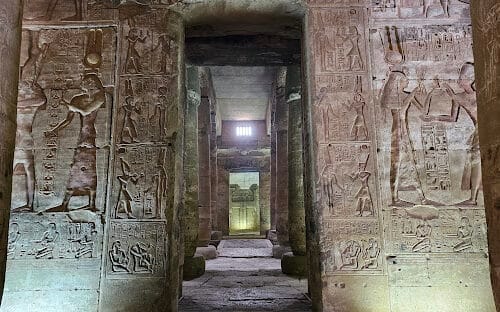
The worship of Min dates back to the Predynastic period, underscoring Akhmim’s deep antiquity. His temple complex was one of the most magnificent in Egypt, though much of it was later quarried for building materials.
Religious Significance: Min was crucial to the agricultural success of the region and the safety of the desert trade routes linking Egypt to the Red Sea. Visiting Akhmim provides a direct connection to the foundational beliefs surrounding creation and sustenance.
The Min Festival: Ancient sources detail the “Festival of the Steps,” a major public procession dedicated to Min, highlighting Akhmim’s importance as a central destination for pilgrims.
2. The Link to Imhotep
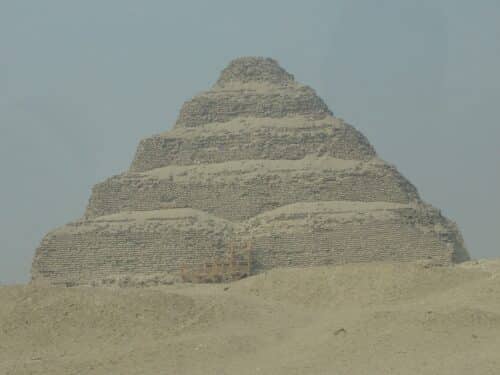
Historical evidence suggests that the famous polymath and architect Imhotep, who was deified centuries after his death, was closely associated with or possibly worshipped at Akhmim, linking the site to both engineering genius and divine patronage.
II. The Monumental Legacy: Meritamun and the Colossal Statues
Despite the loss of its main temple, Akhmim remains famous for the impressive scale of its surviving monumental statuary, primarily associated with the New Kingdom’s most ambitious builder, Ramses II.
3. The Statue of Princess Meritamun
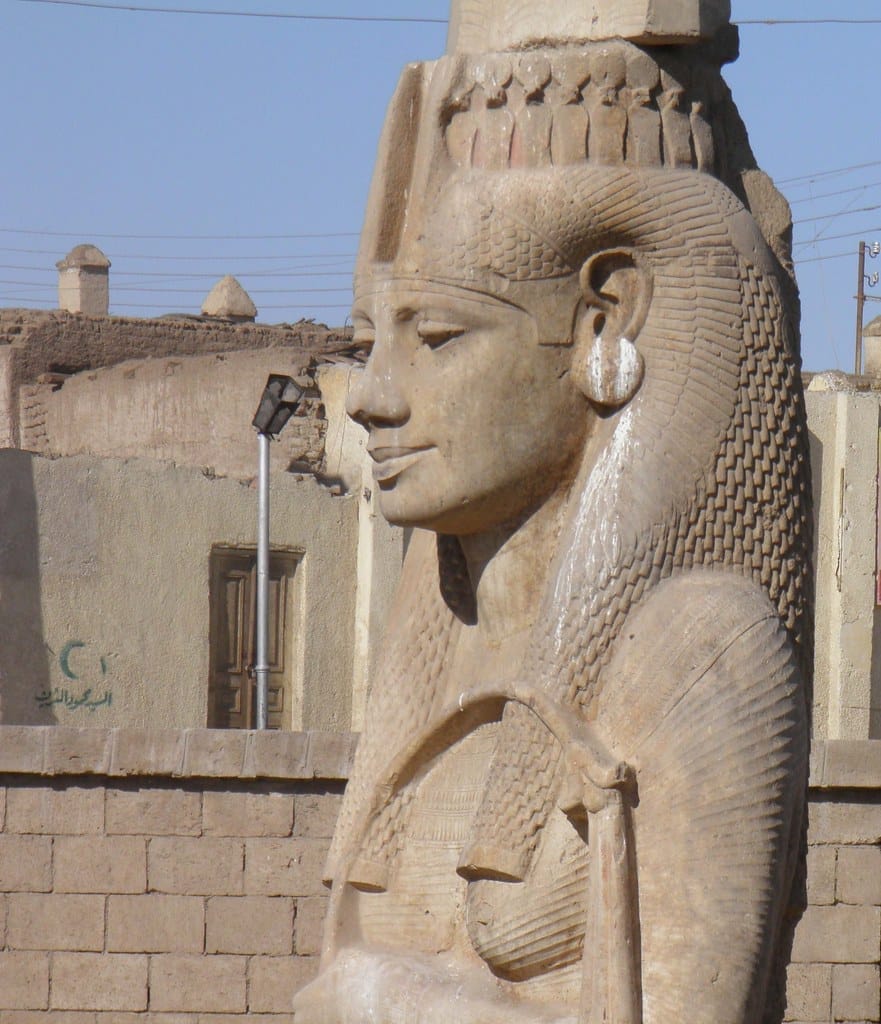
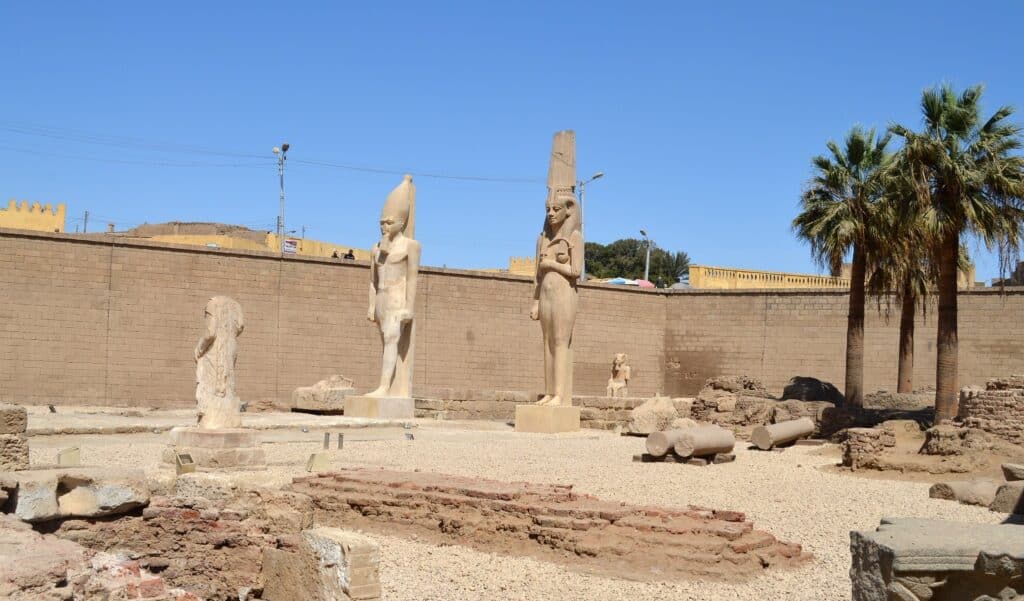
The most spectacular standing relic is the colossal statue of Princess Meritamun, the daughter and Great Royal Wife of Ramses II. Discovered in the remains of a temple dedicated by Ramses II.
Artistic Significance: The statue is remarkable for its size and for its representation of a royal female figure, showcasing the elegance and power granted to the women of the Ramesside period. Its presence underscores the political importance of Akhmim to the New Kingdom pharaohs.
Scale and Location: The imposing statue, standing proudly amid the ruins, offers a striking, up-close experience of Ramesside monumental sculpture, rivaling similar sites but with fewer crowds.
4. The Ramses II Colossi
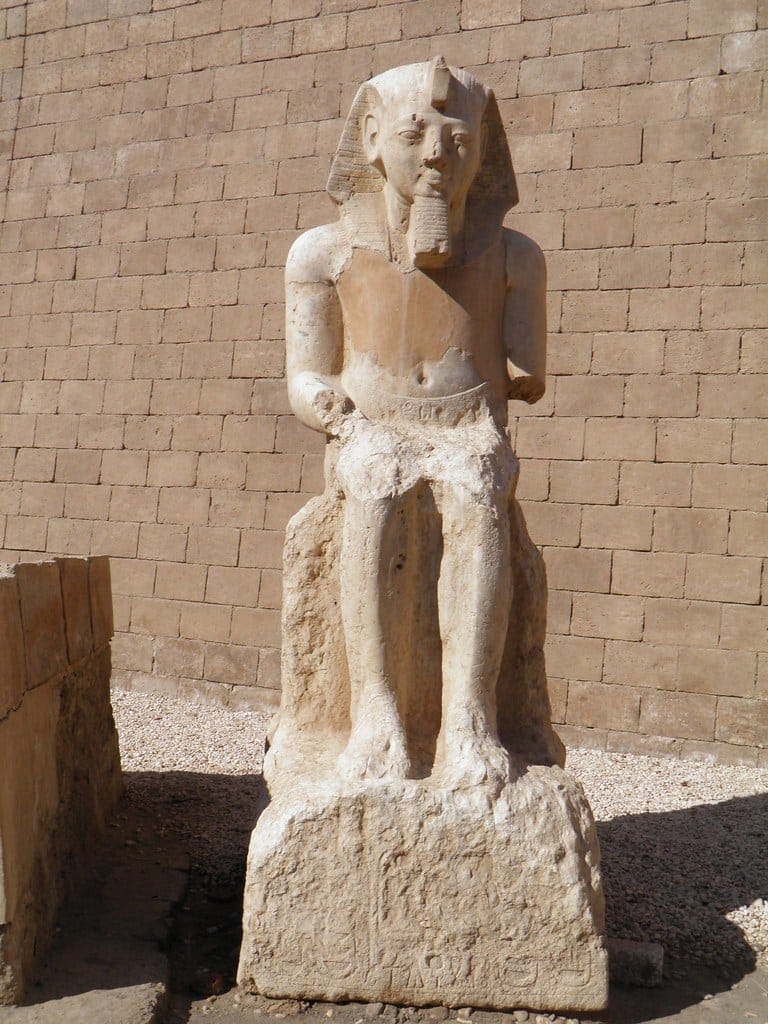
The city was once home to immense statues of Ramses II himself, twin to the statue of Meritamun. Excavations continue to unearth evidence of the massive scale of the royal complex dedicated to both Min and the Ramesside family.
III. From Pharaonic Linen to Coptic Textiles
Akhmim has maintained a long, unbroken tradition of craftsmanship and artistry, particularly in the textile industry, linking its Pharaonic past to its Coptic Christian era.
5. The Linen and Weaving Center
In antiquity, Akhmim was renowned across the Mediterranean world for producing high-quality white linen. Weaving was directly associated with the city’s cult life, tying the domestic craft to the goddess Neith (who was also worshipped here).
Economic History: The city’s fame as a textile center underscores its economic importance within Upper Egypt for thousands of years, a constant thread running through its history.
6. Coptic Heritage and the Akhmim Fragments
The area became a significant center for Coptic Christianity, and due to the dry climate, thousands of textile fragments (known as the Akhmim fragments) dating from the Coptic, Roman, and Byzantine periods have been preserved.
Cultural Preservation: These fragments, known for their colorful designs, provide invaluable insight into the clothing, art, and daily life of late antiquity, demonstrating the continuation of Egyptian artistic tradition long after the pharaohs.
Conclusion: A Legacy of Grandeur and Faith
Akhmim offers a powerful narrative of monumental scale and enduring faith, connecting the colossal ambitions of Ramses II to the ancient worship of the god Min and the delicate artistry of Coptic weavers. It is a destination that reveals the continuous, multi-layered history of Egyptian civilization far from the primary tourist thoroughfares.
A visit to Akhmim is an essential stop for the traveler seeking authentic monumental art, deep religious history, and a true sense of Upper Egyptian continuity.
Ready to witness the silent grandeur of Meritamun and the birthplace of the great god Min? Let My Egypt Travel guide your unique journey to Akhmim.