Discover the Temple of Mentuhotep II at Deir el-Bahari with My Egypt Travel. Explore the unique architecture of the Middle Kingdom’s greatest reunification site, blending a pyramid with a temple complex.
Mentuhotep II: The Temple of Reunification at Deir el-Bahari
A Monument to Unity: Bridging Eras in Architecture
The western bank of Luxor, famous for its grand New Kingdom temples, holds a profound secret: the mortuary complex of Mentuhotep II Nebhepetre at Deir el-Bahari. This structure is a cornerstone of Egyptian history, marking the end of the chaotic First Intermediate Period and the triumphant start of the stable, brilliant Middle Kingdom. Mentuhotep II, the king who reunified Egypt after more than a century of division, built a monument as unique and transitional as his reign.
Mentuhotep’s temple offers a crucial architectural and historical contrast to its massive neighbor, Hatshepsut’s temple. It is a site that embodies rebirth, blending the ancient tradition of the pyramid with the evolving design of the rock-cut temple. This non-conventional guide, brought to you by My Egypt Travel, explores this complex as the physical testament to Egypt’s re-emergence.
I. A Revolutionary Design: The Terrace Temple
Mentuhotep II’s temple introduced a revolutionary design that departed sharply from the Old Kingdom style, influencing subsequent generations of builders, most notably Hatshepsut.
1. The Unique Blended Structure
The temple complex featured a magnificent terraced structure, possibly topped by a symbolic pyramid or a mastaba-like structure. This design merged elements of the Old Kingdom (the pyramid) with the New Kingdom’s rock-cut tombs (the cliffs).
Architectural Innovation: The complex was built directly into the towering cliffs of the Theban mountains, utilizing the sheer rock face as a natural architectural element, creating a dramatic, imposing effect.
The Central Feature: The exact form of the central mass remains debated—it was either a true small pyramid or a rectangular sanctuary—but its presence visually linked the temple back to the great tradition of royal tombs.
2. The Great Unifier
The complex is the physical culmination of Mentuhotep II’s 51-year reign, during which he ended the civil war and restored central authority to Egypt from his base in Thebes.
II. Symbolism of the Middle Kingdom
The temple served not just as a tomb, but as a symbolic stage for the king’s elevation to divine status, a key feature of the Middle Kingdom’s spiritual landscape.
3. The Royal Sarcophagus
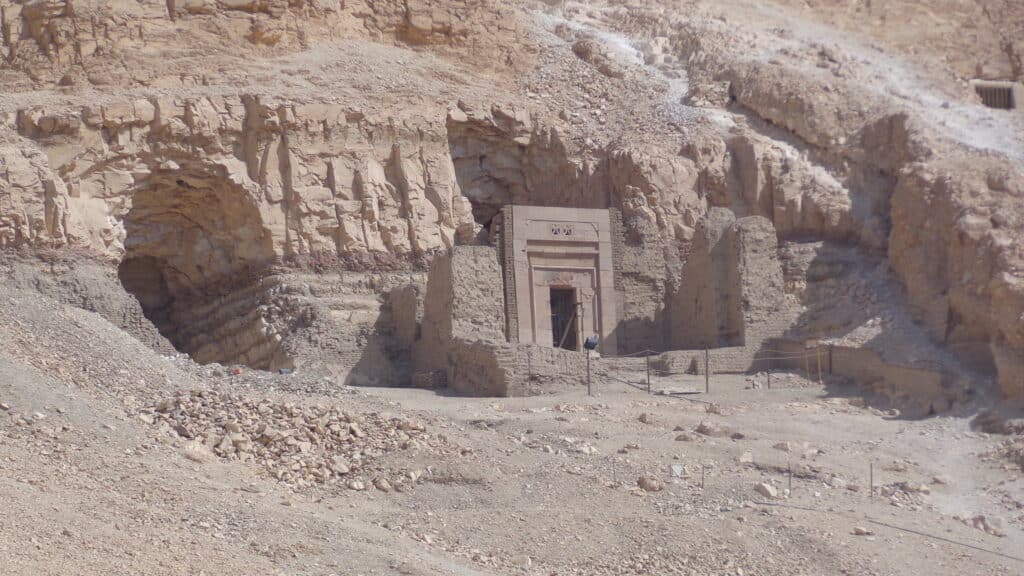
Beneath the structure, the king’s tomb chamber was accessed via a massive, deep shaft. His actual burial chamber was deep within the mountain, emphasizing protection and secrecy.
Funerary Goods: Though the complex was later looted, excavations revealed royal artifacts and statues, including the famous painted sandstone statue of the enthroned king, now in the Egyptian Museum.
4. The Six Queens
Within the temple’s forecourt, archaeologists discovered the tombs of six royal women, secondary wives of Mentuhotep II. Their beautifully inscribed sarcophagi provide important evidence of the royal harem and the religious practices of the time.
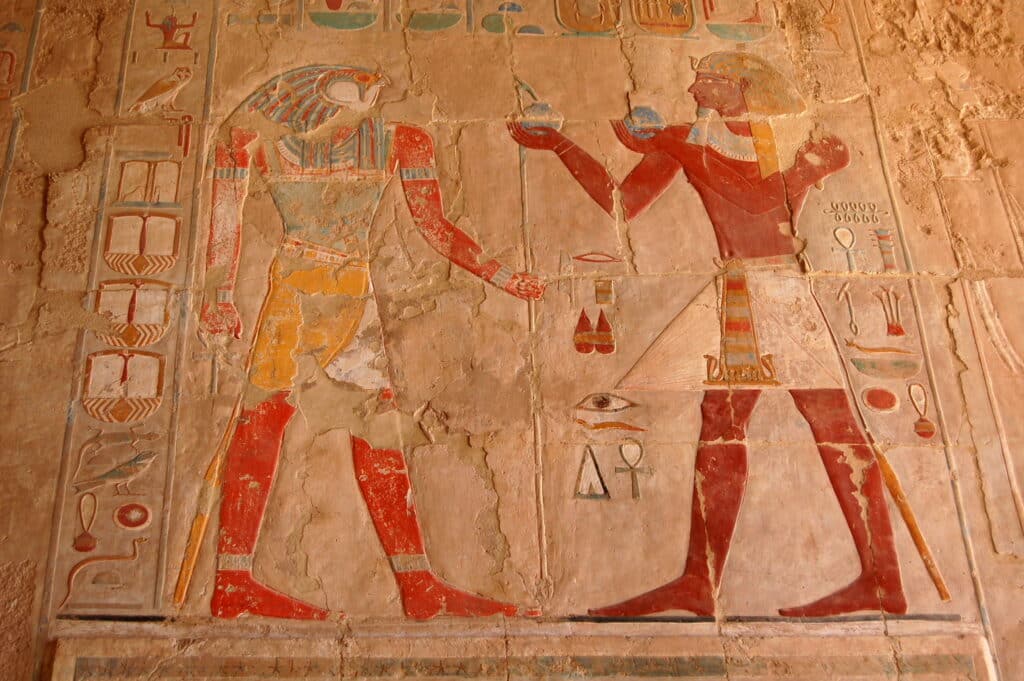
III. The Theban Necropolis and Its Legacy
Mentuhotep’s choice of location established Deir el-Bahari as a sacred site, setting the precedent for the massive royal constructions that would follow in the New Kingdom.
5. A Predecessor to Grandeur
The sheer size and complexity of Mentuhotep’s complex paved the way for the neighboring funerary temples of later rulers.
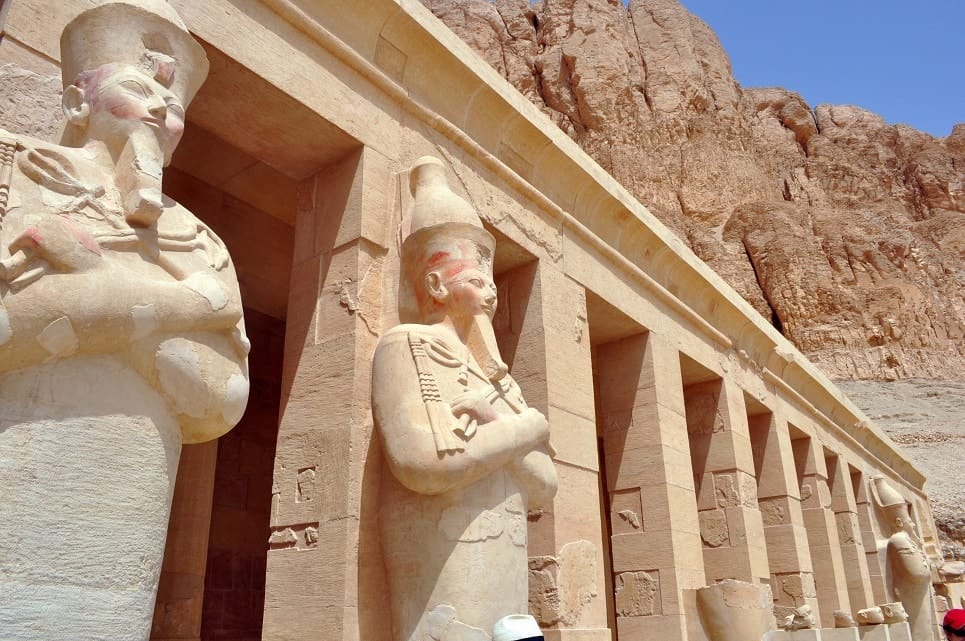
Visual Contrast: Standing on the site allows travelers to directly compare the elegant restraint and unique geometry of the Middle Kingdom temple with the later, more flamboyant New Kingdom design of Hatshepsut.
Continuous Worship: The site remained a place of reverence for centuries, even after the king’s death, highlighting its enduring spiritual importance in Theban tradition.
6. The Landscape of Thebes
The temple’s strategic position in the cliffs offers a spectacular view across the Nile Valley towards the east bank of Luxor, connecting the royal funerary landscape to the thriving religious center across the river.
Conclusion: The Birth of a New Era
Mentuhotep II’s temple at Deir el-Bahari is more than just a burial site; it is a historical declaration. It signifies the moment Egypt recovered its unity and embarked on its second great Golden Age. The monument’s innovative architecture perfectly reflects the stability and creativity that defined the Middle Kingdom.
A visit here is essential for understanding the pivotal transition between the early Pyramid Age and the later imperial grandeur of the New Kingdom.
Ready to explore the monument built by the great unifier of Egypt? Let My Egypt Travel guide your unique journey through Deir el-Bahari.