Discover Avaris, the ancient capital of the Hyksos invaders in the Nile Delta. Explore the unique Canaanite temples, the Minoan frescoes, and the pivotal site where Egyptian and Near Eastern cultures collided. Plan your deep history expedition with My Egypt Travel.
⚔️ Avaris (Tell el-Dab’a): Unearthing the Lost Hyksos Capital and Ancient Crossroads
Avaris: The City of the “Rulers of Foreign Lands”
Avaris, known archaeologically today as Tell el-Dab’a, is a vast, historically pivotal site located in the northeastern Nile Delta. This city stands as the most critical archaeological witness to one of the most tumultuous periods in Egyptian history: the Second Intermediate Period (c. 1650–1550 BCE), when a group of Near Eastern immigrants known as the Hyksos (meaning “Rulers of Foreign Lands”) seized control of Lower Egypt and established Avaris as their capital.
For the American and European traveler, Avaris offers a rare, profound look at ancient history from an international perspective—a period not of grand Egyptian power, but of cultural blending, conflict, and eventual national resurgence. The site is a treasure trove of evidence demonstrating the deep connections between Egypt, the Levant (Canaan/Syria), and even the Aegean world. This non-conventional guide, brought to you by My Egypt Travel, explores Avaris as the epicenter of geopolitical change and a bridge between ancient civilizations.
The Intercultural Narrative: A Non-Conventional Approach
The story of Avaris is not just about Egyptian history; it is a story of global trade, migration, and the impact of foreign technology (like the horse-drawn chariot and the composite bow) on Egyptian society. We emphasize the unique archaeological finds—such as the Near Eastern temple architecture and the Minoan-style frescoes—which reveal a level of cultural integration rarely seen elsewhere in Egypt.
I. The City of the Hyksos: Near Eastern Identity
The archaeology of Tell el-Dab’a vividly reflects its status as a foreign capital on Egyptian soil.
1. Canaanite Temples and Architecture
Excavations have revealed architectural forms that are distinctly Canaanite (Levantine), including temples built in a Syrian style, complete with courtyards and pits used for sacrificial offerings.
Unique Feature: The religious practices and the urban layout found at Avaris diverge significantly from traditional Egyptian models, providing direct evidence of the Hyksos settlers’ Near Eastern origins and cultural persistence.
2. Burial Practices and Artifacts
The necropolis at Avaris reveals a blending of customs. Burials include Egyptian elements but also feature horses and donkeys buried alongside their owners—a practice more common in the Levant. Furthermore, the grave goods include pottery and weaponry characteristic of the Syro-Palestinian region.
3. The Citadel and Fortifications
As a capital established by a foreign power, Avaris was heavily fortified. Remains of massive defensive walls and a large administrative complex confirm its role as the military and political seat of the Hyksos kingdom.
II. Surprising Global Connections
Avaris was a melting pot, revealing connections not just to its Near Eastern neighbors but to the broader Mediterranean world.
4. Minoan Frescoes (The Aegean Link)
One of the most astonishing discoveries at Tell el-Dab’a was the presence of fragments of Minoan-style frescoes, decorated with bull-leaping and labyrinth motifs, strongly resembling the art found on the island of Crete (Knossos).
Historical Significance: This find suggests a direct and important connection between the Hyksos court and the powerful Minoan civilization in the Aegean, pointing to extensive international trade networks and diplomatic relations during the Second Intermediate Period. This challenges the traditional view of the Hyksos as purely isolated invaders.
5. Technology Transfer
The Hyksos are credited with introducing several key military innovations to Egypt, most famously the horse-drawn chariot and the composite bow. These technologies would later be adopted by the Egyptian pharaohs of the New Kingdom and used to build their great empire.
III. The End of Avaris and the New Kingdom
The history of Avaris culminates in a dramatic national liberation movement.
6. The Liberation War
The final phase of Avaris involved the war of liberation led by the Theban princes of Upper Egypt. Pharaoh Ahmose I successfully drove the Hyksos out of Avaris and pursued them into Palestine, unifying Egypt and ushering in the glorious New Kingdom.
National Narrative: The destruction and eventual abandonment of Avaris became a powerful symbol of the Egyptian nation’s ability to expel foreign rulers and reclaim its destiny. Ahmose founded the nearby city of Pi-Ramesses on the ruins of Avaris, effectively erasing the memory of the Hyksos capital.
7. Pi-Ramesses
The nearby site of Pi-Ramesses (founded by Ramesses II) incorporated parts of the Avaris site. This later city became the massive capital of the New Kingdom, symbolizing the complete reversal of fortune: from foreign rule to imperial power.
IV. Planning Your Geopolitical Tour with My Egypt Travel
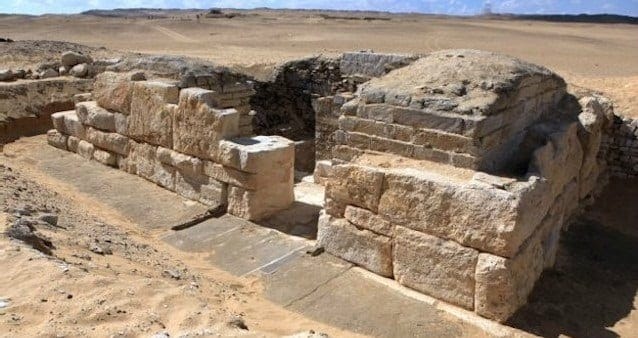
A trip to Avaris is an intense, specialized journey, best suited for travelers who have a keen interest in historical change, archaeology, and the relationship between Egypt and the Near East.
Logistics and Purity of Experience
Private Expeditions: Tell el-Dab’a is remote and primarily an active archaeological site, not a polished tourist destination. It is best visited via a dedicated, private road trip from Cairo (approx. 2 hours). We handle all access and logistics for this unique area.
Specialized Guidance: The ruins at Avaris are complex and require deep interpretation. Our tours are led by specialized Egyptologists who can reconstruct the city’s unique Canaanite architecture, decipher the significance of the Minoan fragments, and detail the geopolitical narrative of the Hyksos occupation.
The My Egypt Travel Focus
We position Avaris as a key site for understanding global antiquity. We guide travelers through the remnants of the temples and fortifications, reflecting on the historical moment when Egypt was ruled by foreigners and how those foreigners inadvertently provided the technology needed for Egypt’s greatest imperial age.
🔑 Conclusion: The Crossroads of Ancient History
Avaris is a quiet but monumental witness to the fragility and resilience of one of the world’s greatest civilizations. It is the site that housed foreign rulers, hosted Minoan artists, and became the pivotal battleground for national liberation. It offers a profound, unscripted, and intellectually challenging look at the ancient world’s geopolitical and cultural fluidity.
Ready to walk the ground where Canaanite temples stood and where the Hyksos kingdom fell? Let My Egypt Travel guide your unique historical expedition to Avaris (Tell el-Dab’a).