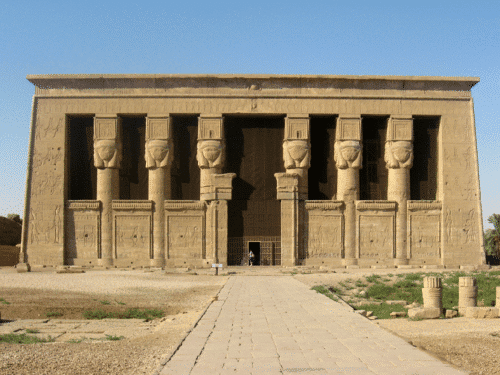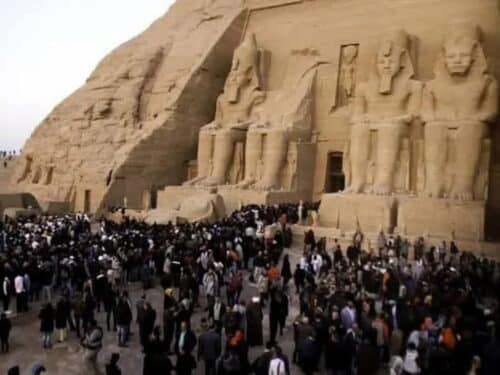
Journey to Edfu with My Egypt Travel to explore the Temple of Horus, Egypt’s best-preserved sanctuary. Witness the monumental perfection of Ptolemaic architecture and the mythological battle of Horus and Seth.
Edfu: The Temple of Horus | A Window into Ancient Faith
A Frozen Moment in Time: A Marvel of Preservation
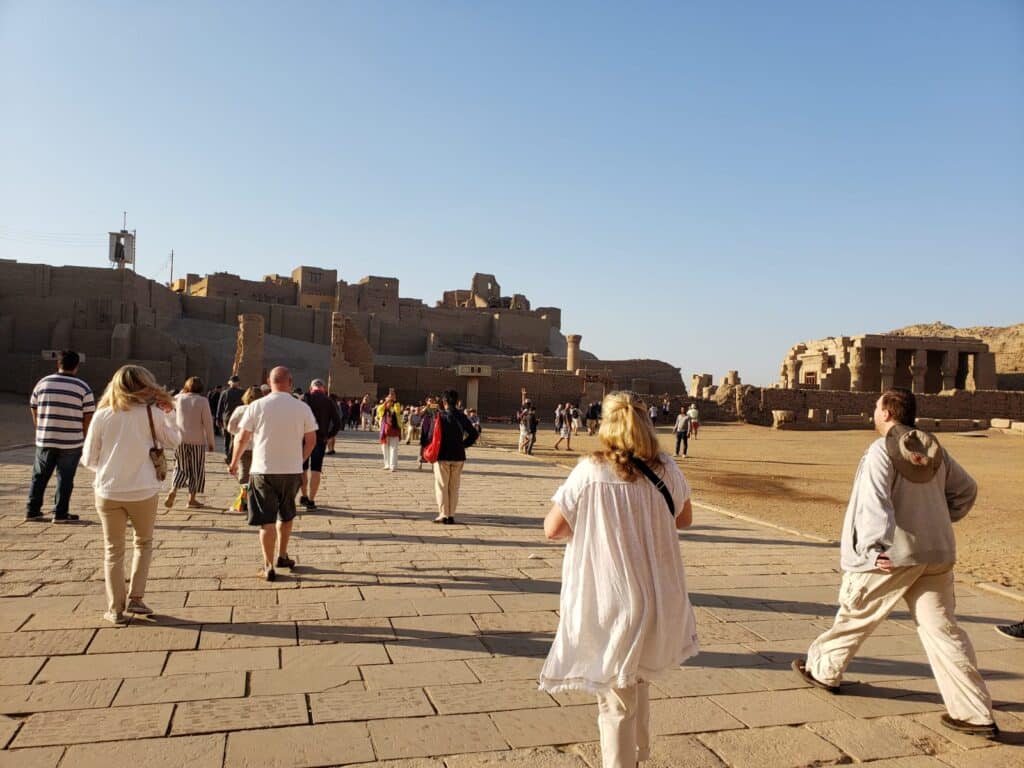
Edfu, situated peacefully on the Nile’s west bank, is home to the Temple of Horus, a destination that instantly captivates the imagination. This is not a ruin; it is a monument seemingly frozen in time, offering an unparalleled glimpse into the structure, decoration, and function of an ancient Egyptian sanctuary. While built during the Ptolemaic era (starting 237 BC), the temple meticulously adheres to the classical Pharaonic style, making it the most complete architectural guide we possess to understanding Egyptian temple life.
For the American and European traveler, Edfu is a powerful, immersive experience—a chance to step beneath an intact temple roof and walk the chambers as priests once did. It is here that the great cosmic drama of Horus and Seth is carved into the very walls. This non-conventional guide, brought to you by My Egypt Travel, unveils Edfu as the most perfectly preserved jewel in Egypt’s crown.
I. The Architecture of Perfection: A Guidebook in Stone
The Temple of Horus owes its pristine condition to being buried beneath layers of desert sand and Nile silt for centuries, protecting its stonework, courtyards, and inner sanctuaries from the ravages of time and conflict.
1. The Immense Pylon
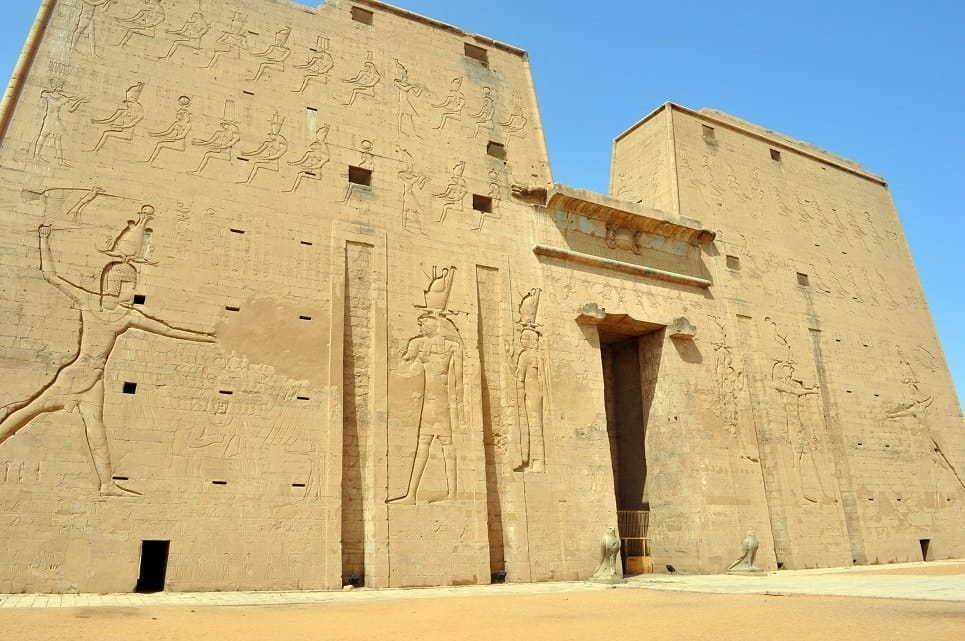
The temple’s entrance is dominated by a towering pylon, standing over 37 meters high. Its surface is entirely covered in magnificent relief carvings depicting Ptolemy XII Neos Dionysos ritually smiting his enemies before the great Falcon god Horus.
Sense of Scale: Standing before the pylon, the traveler is immediately transported into the monumental scale and political theology of the ancient state, feeling the deliberate intimidation and grandeur intended by the builders.
The Rosetta Stone of Structure: Because Edfu is so complete, it is the standard against which all other Egyptian temple architecture is measured, allowing visitors to visualize how the fragmented temples of Karnak or Luxor once functioned.
2. The Intact Sanctuary
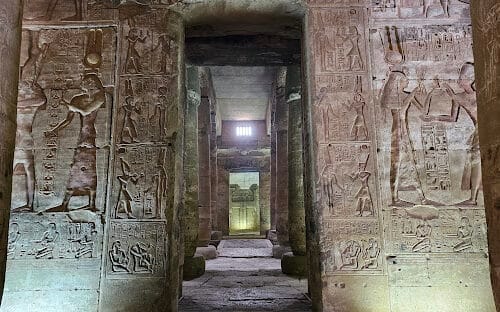
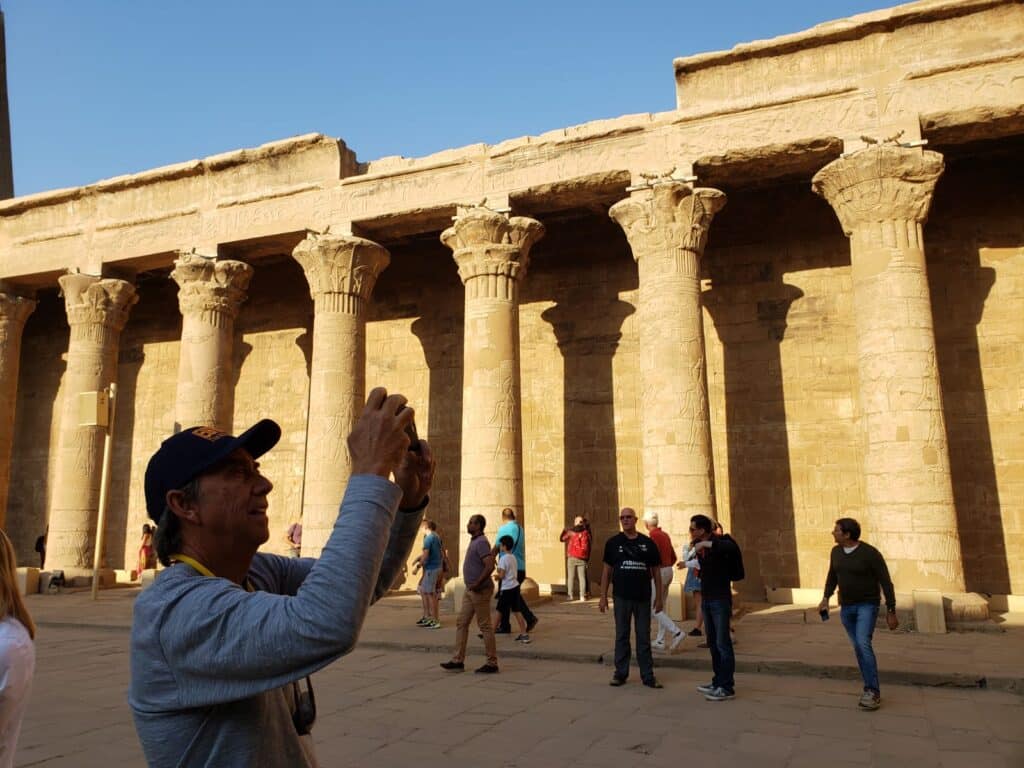
Walking through the hypostyle halls, the offering rooms, and into the inner sanctuary—where the granite shrine of the divine barque (boat) once rested—the visitor experiences the increasing darkness and elevation that defined the spiritual journey into the temple’s heart.
Priestly Life: The preservation extends to the smaller chambers used as libraries, treasuries, and storage rooms, providing a rare window into the practical, administrative life of the priesthood.
II. Mythology Made Manifest: The Drama of Horus
The Temple of Horus is essentially a massive stone library dedicated to the great foundational myth of Egyptian civilization: the conflict between the sky god Horus and his uncle Seth.
3. The Ritual Battle
The temple walls recount the annual ritual drama performed here, commemorating the cosmic struggle. The reliefs show detailed scenes of Horus slaying Seth (often depicted as a hippopotamus).
Cosmic Order: This mythology embodies the eternal struggle between Ma’at (Order) and Isfet (Chaos). Experiencing the temple allows the traveler to literally walk through the visual narrative of how the Egyptians believed the world was preserved.
The Mammisi (Birth House): Located outside the main temple, the Mammisi is dedicated to the birth of the young god Harsomtus (Horus the Uniter of the Two Lands), a symbol of royal renewal and fertility.
4. The Falcon God’s Domain
Horus, the patron god of Edfu, is omnipresent, depicted as a majestic falcon or a man with a falcon head. The entire site radiates the fierce, protective power of this sky deity.
III. The Unexpected History of the Ptolemies
The beauty of Edfu lies in its construction date. While it is built entirely in the style of the New Kingdom, it was erected more than a thousand years later, underscoring the enduring power of Egyptian culture under foreign rule.
5. Greek Patrons, Egyptian Style
The Ptolemies, descendants of Alexander the Great, meticulously adopted Pharaonic religious architecture to legitimize their rule to the Egyptian populace.
Cultural Continuity: Edfu stands as a physical testament to the strength of Egyptian tradition—a culture so robust that foreign rulers were compelled to build monuments exactly as the ancient Pharaohs did.
6. The Nile Journey
The temple’s location makes it a classic stop on the timeless Nile cruise voyage. Edfu provides a vital anchor point between the monumental centers of Luxor and the Aswan region, offering a complete picture of religious architecture along the river.
Conclusion: The Ultimate Temple Experience
Edfu is an essential destination because it offers the ultimate temple experience: a chance to witness an Egyptian sanctuary exactly as it looked thousands of years ago. It is a powerful journey into monumental art, dramatic mythology, and the unbroken chain of Egyptian faith.
A visit to Edfu is the final key to unlocking the full understanding of ancient Egyptian religious architecture.
Ready to walk the perfect halls of the great Temple of Horus? Let My Egypt Travel guide your unique journey to Edfu.