Explore Kom Ombo, the unique double temple overlooking the Nile. Discover the symmetrical sanctuaries dedicated to the fertility god Sobek and the healing god Haroeris, and examine the ancient surgical tools carved in stone. Plan your specialized historical tour with My Egypt Travel.
🐊 Kom Ombo Temple: The Double Sanctuary of Sobek the Crocodile and Haroeris the Falcon
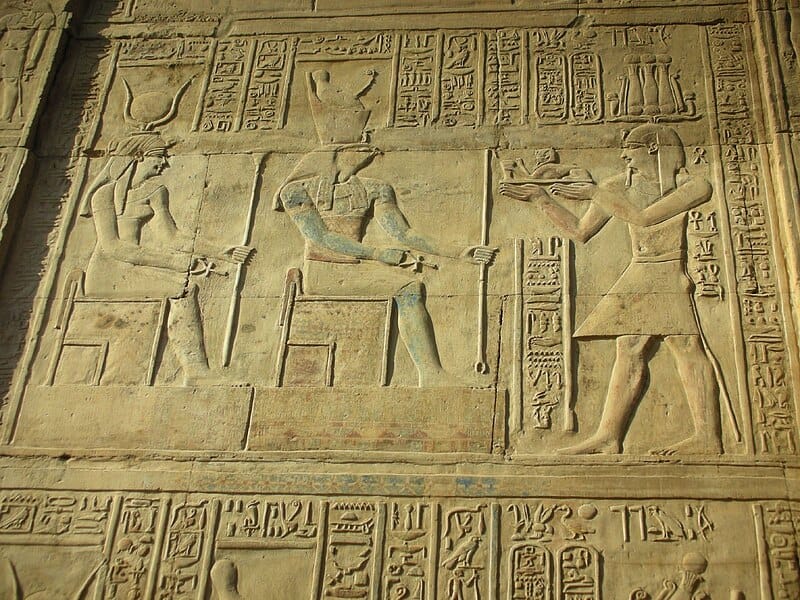
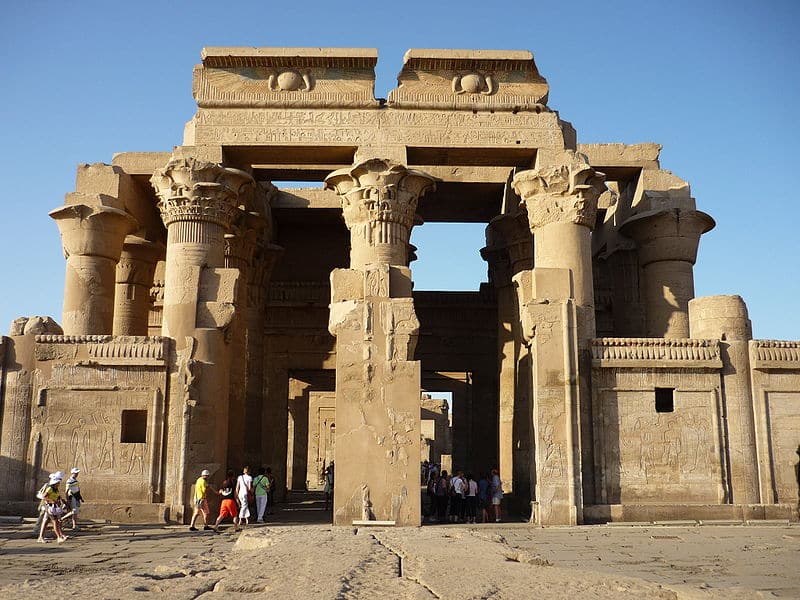
Kom Ombo, translating to “the mound of Ombo,” is an astonishing site located on a high bank of the Nile in Upper Egypt, approximately 40 kilometers north of Aswan. Its fame rests entirely on its unique architectural design: it is the only temple in Egypt built specifically with a perfectly symmetrical, dual dedication, featuring twin entrances, twin courtyards, twin halls, and twin sanctuaries.
The temple is dedicated to two powerful, yet contrasting, divine entities: Sobek, the crocodile god of fertility and the creator of the world, and Haroeris (Horus the Elder), the falcon god of the sky and healing.
For the American and European traveler, Kom Ombo offers a direct, powerful lesson in the duality of ancient Egyptian thought—the balance between creation and destruction, darkness and light. Its beautiful location and specialized carvings make it an essential stop for river cruisers and those interested in ancient medicine. This non-conventional guide, brought to you by My Egypt Travel, explores Kom Ombo as the spiritual guardian of the Nile and the ancient hospital in stone.
The Principle of Duality: A Non-Conventional Approach
Kom Ombo’s unique character lies in its symmetry. We emphasize the philosophical and religious reasons behind the dual design, reflecting the inherent balance sought by the ancient Egyptians (e.g., Upper vs. Lower Egypt, Chaos vs. Order). The temple’s dual dedication makes it a unique teaching tool for understanding the complexity of Egyptian theology.
I. The Symmetrical Marvel of Architecture
The design of Kom Ombo is what sets it apart from every other temple along the Nile.
1. The Dual Design (Sobek and Haroeris)
The entire temple, constructed primarily during the Ptolemaic and Roman periods, is split down the middle by a central axis:
The Southern (Right) Side: Dedicated to Sobek (the Crocodile God), along with his consort Hathor and their son Khonsu. This side was associated with the fierce power of the Nile, creation, and the fate that lay beneath the waters.
The Northern (Left) Side: Dedicated to Haroeris (Horus the Elder), along with his consort Tasenetnofret (The Good Sister) and their son Panebtawy (The Lord of the Two Lands). This side was associated with light, healing, and protection.
2. Twin Entrances and Twin Sanctuaries
Visitors entering the temple complex pass through the massive gateway, where two distinct doors lead into the respective halves of the temple, maintaining the separation all the way to the twin Holy of Holies. This design is a clear, physical manifestation of the theological balance required by the Nile Valley.
II. Unique Hieroglyphs: Medicine and Astrology
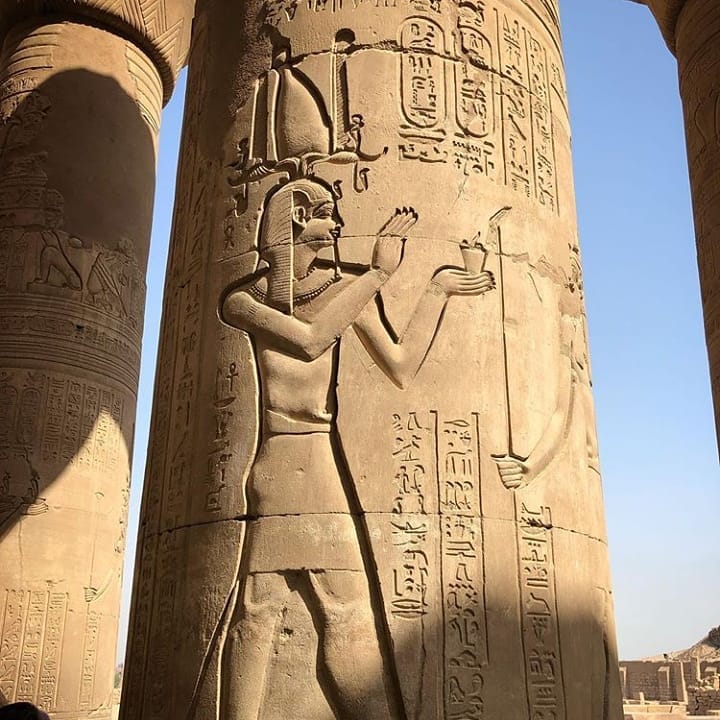
Beyond its architecture, Kom Ombo is famous for specific, detailed reliefs that provide rare insight into ancient knowledge.
3. The Ancient Surgical Tools
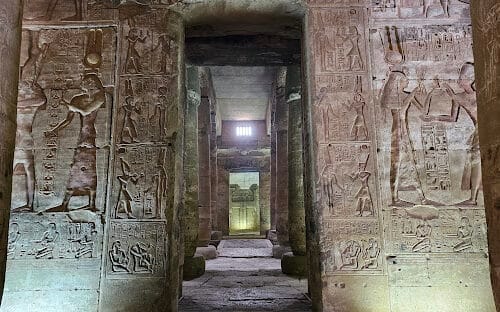
One of the most remarkable reliefs in the temple is found on the posterior wall of the outer corridor. It depicts a detailed collection of surgical and medical instruments, including scalpels, bone saws, dental tools, suction cups, obstetrical implements, and forceps.
Historical Significance: This wall serves as one of the best surviving visual records confirming the advanced state of surgical and medical knowledge held by the ancient Egyptians. It suggests the temple may have housed a Per Ankh (House of Life), a scriptorium or school for priests and doctors.
4. The Nilometer and Calendrics
An accessible Nilometer (a structure used to measure the clarity and level of the Nile flood) is located at Kom Ombo. This highlights the temple’s practical, religious, and economic function: predicting the flood was crucial for agriculture and determining tax rates.
III. The Cult of the Crocodile and the Mummies
The area around Kom Ombo has a strong association with the sacred animals of Sobek.
5. The Crocodile Museum
Located immediately beside the temple is the modern Crocodile Museum. This museum houses dozens of mummified crocodiles recovered from tombs and necropoleis in the Kom Ombo area.
Religious Practice: These mummified creatures, often perfectly preserved, were once offerings to the god Sobek, symbolizing his power and the reverence (and fear) he commanded along the river.
6. The Temple’s Location
The site was strategically chosen because the Nile bank here was historically a favorite place for crocodiles to bask, giving the Sobek cult a powerful, natural setting. Visitors can still appreciate the commanding view the temple offers over the river.
IV. Planning Your Specialized Tour with My Egypt Travel
Kom Ombo is a key stop, almost always included in any Nile River cruise, but visiting it independently allows for a deeper, more focused exploration.
Logistics and Purity of Experience
Accessibility: Kom Ombo is easily accessible by road from Aswan (approximately 1 hour) or Edfu. My Egypt Travel coordinates private road transfers or dedicated cruise excursions, often visiting during the cooler early morning or late evening hours to appreciate the lighting and avoid the crowds.
Night Visit: The temple is spectacularly illuminated at night, and an evening visit is highly recommended to appreciate its grandeur and the drama of its silhouette against the Nile.
Specialized Guidance: Understanding the theological implications of the dual design, the precise use of the medical tools on the reliefs, and the history of the Sobek cult requires specialized guidance. Our Egyptologists bring the scientific and mythological details to life.
The My Egypt Travel Focus
We position Kom Ombo as the perfect example of Egyptian religious philosophy in stone. We guide travelers through the symmetrical halls, emphasizing the story of duality, dwelling on the fascinating surgical reliefs, and connecting the ancient fear of the crocodile god to the mummified specimens in the nearby museum.
🔑 Conclusion: The Balance of Power on the Nile
Kom Ombo is a monument to balance—a unique architectural and theological masterpiece where the terrifying power of the crocodile god meets the gentle touch of the healing falcon god. It stands as a profound testament to ancient Egyptian architectural ingenuity and their advanced knowledge of medicine and astronomy.
Ready to explore the perfect architectural symmetry of the Temple of Kom Ombo and decipher the secrets of ancient surgical science? Let My Egypt Travel guide your unique historical journey to this majestic dual sanctuary.