Journey to Qena, the Upper Egyptian hub and historic link to the Eastern Desert. Explore the stunning, astrologically-focused Temple of Hathor at Dendera, the Coptic monasteries, and the ancient Red Sea trade routes. Plan your profound historical tour with My Egypt Travel.
🌟Qena: The Celestial Gateway to Dendera Temple & Red Sea Trade Routes, Where the Nile Valley Meets the Cosmos
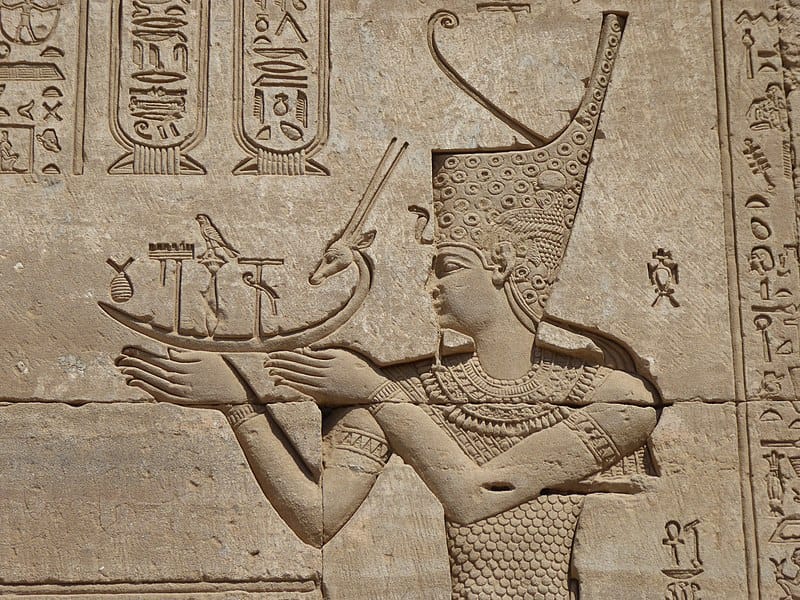
Qena, a bustling city located on the east bank of the Nile in Upper Egypt, is one of the region’s most important administrative centers. Historically, it was known as Caene and served as a crucial hub for trade, connecting the fertile Nile Valley to the mines and ports of the Red Sea via the Wadi Hammamat route. However, Qena’s true fame rests with its immediate proximity to one of Egypt’s most magnificent and best-preserved religious sites: the Temple of Hathor at Dendera.
For the American and European traveler, Qena offers an essential historical link, blending the grandeur of Ptolemaic and Roman temple architecture with the region’s ancient commercial life. It is a destination that captivates those interested in astronomy, mythology, and the continuity of religious belief. This non-conventional guide, brought to you by My Egypt Travel, explores Qena as the strategic crossroads and celestial sanctuary of the Nile Valley.
The Temple’s Focus: A Non-Conventional Approach
While Qena is a large city, the traveler’s focus is on Dendera. The temple’s excellent preservation, its unique astrological reliefs (like the famous Zodiac), and its deep connection to the goddess Hathor (the deity of love, music, and motherhood) make it immensely appealing. We highlight Dendera not just as ruins, but as a living monument to ancient Egyptian celestial science.
I. Dendera: The Temple of Hathor
Located on the west bank, Dendera is the jewel of the Qena region, known for its late-period architecture and stunning preservation.
1. The Temple of Hathor (The Best-Preserved Temple)
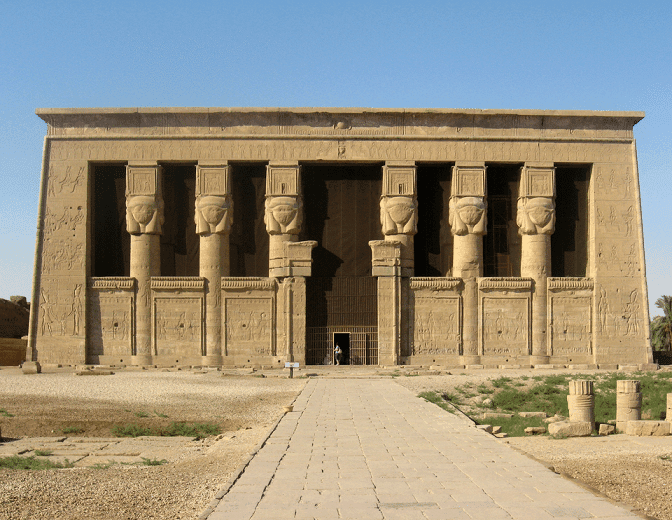
The main temple is one of the latest temples built in the traditional Egyptian style, dating mostly to the Greco-Roman period. Its late date is precisely why it is so well-preserved, with its roof, crypts, and underground passages largely intact.
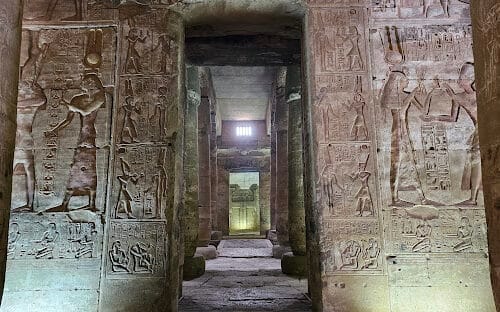
Architectural Grandeur: The temple’s enormous entrance hall (Hypostyle Hall) is renowned for its magnificent ceiling, which is divided into astronomical sections depicting the zodiac, the phases of the moon, and the path of the sun. The capitals of the columns are adorned with the distinctive four-faced head of Hathor.
The Celestial Secrets: The original Dendera Zodiac (now in the Louvre) was located in the Chapel of Osiris, and a plaster cast remains. This relief, depicting constellations and the celestial movements, underscores the ancient Egyptian fusion of astronomy and religion.
2. The Crypts and Sacred Lake
The temple complex includes hidden crypts, some of which contain fascinating reliefs showing temple treasures and rituals. The well-preserved Sacred Lake nearby, used for ritual purification, completes the picture of the vast temple operation.
3. The Mammisi (Birth House)
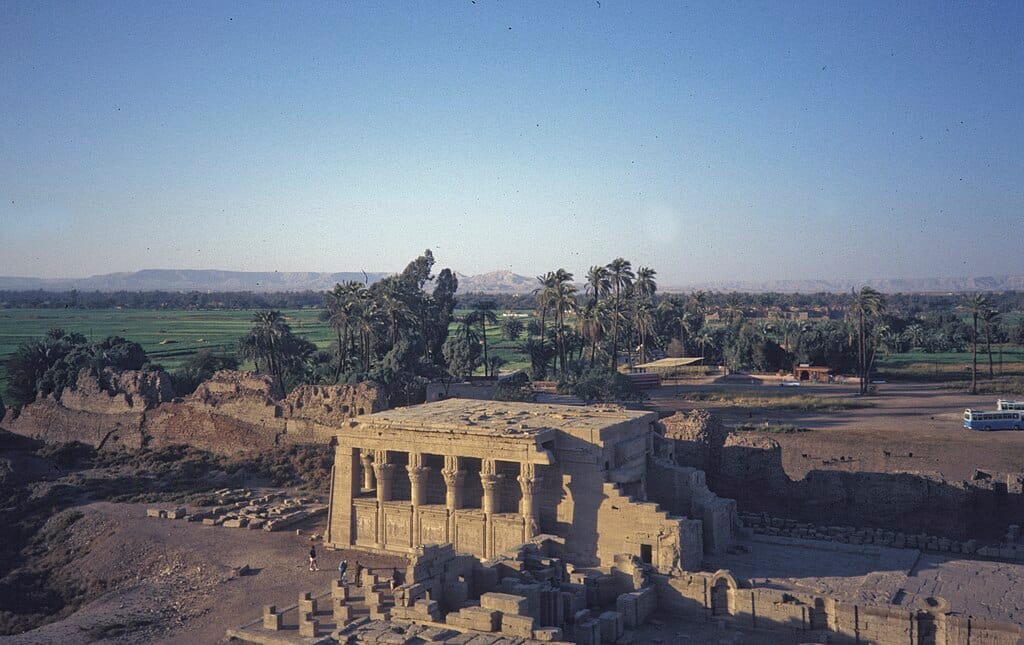
The Birth House in the complex is dedicated to the birth of Hathor’s son, Ihy. It is particularly valuable for its reliefs showing the divine birth process, a common theme in Ptolemaic temple architecture.
II. The Strategic Hub: Desert Trade and Roman Influence
Qena’s location made it an essential strategic and commercial pivot point in ancient times.
4. The Wadi Hammamat Route (The Ancient Trade Highway)
Qena lies at the mouth of the Wadi Hammamat, the primary route used since pre-dynastic times to access the gold, silver, and stone quarries of the Eastern Desert and, crucially, the Red Sea ports (like Quseir).
Economic History: This route was vital for importing luxury goods and strategic materials. This history gives Qena a deep, continuous heritage as a trading hub.
5. Roman Settlements
The region still holds ruins of Roman settlements and fortifications that protected the trade route, highlighting Qena’s importance in the Roman imperial network. The Romans often mixed local Egyptian cults (like Hathor) with their own gods, a synthesis visible in the temple architecture.
III. Spiritual Continuity: Coptic and Islamic Landmarks
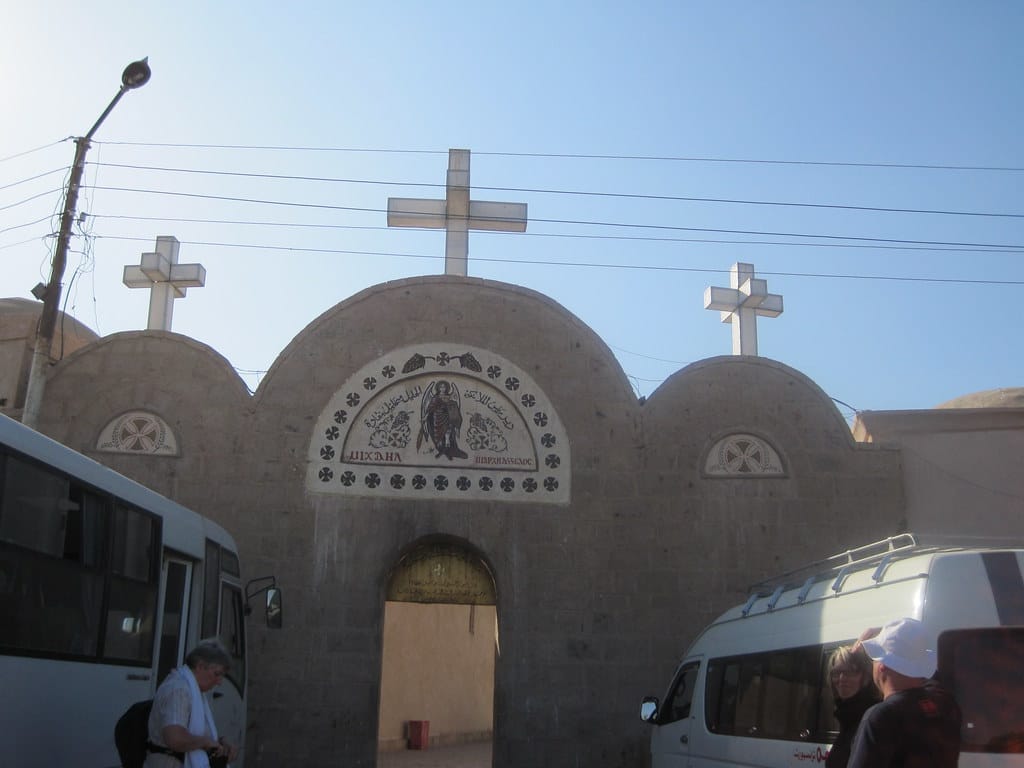
Qena’s history extends through the Christian and Islamic periods, reflecting the continuity of life along the Nile.
6. The Monastery of St. Michael the Archangel (Deir Malak)
Qena is home to several Coptic Christian sites, including the Monastery of St. Michael, showcasing the enduring religious heritage of the region that followed the decline of the pagan temples.
7. Sayyidi Abd el-Rahim Qenawi Mosque
The city’s main landmark is the beautiful Mosque of Sayyidi Abd el-Rahim Qenawi, a highly revered 12th-century Sufi scholar.
Cultural Focus: The annual Moulid (festival) celebrating Sayyidi Qenawi is one of the largest and most vibrant religious festivals in Upper Egypt, drawing pilgrims from across the country and giving Qena a unique cultural energy.
IV. Planning Your Celestial Tour with My Egypt Travel
Qena is conveniently located for tourists, making it an ideal day trip from Luxor or a strategically placed overnight stop.
Logistics and Accessibility
Day Trip Perfection: Dendera is located only about an hour north of Luxor, making it an easy and highly recommended day excursion from the larger tourist hub. My Egypt Travel coordinates safe, air-conditioned transfers, often combining it with other key sites en route.
Expert Interpretation: Due to the complexity of the astronomical and mythological reliefs at Dendera, our tours are guided by specialist Egyptologists who can decipher the ceiling’s secrets, translating the ancient celestial knowledge for our guests.
The My Egypt Travel Focus
We position Qena as a necessary spiritual and historical stop. We guide travelers through the magnificent Hall of Columns at Dendera, exploring the hidden crypts, and concluding with a visit to the city’s lively Islamic center, providing a complete, multi-layered historical narrative.
🔑 Conclusion: The Sanctuary of Light and Love
Qena is the gateway to the Temple of Hathor—a magnificent sanctuary that preserves the deep, mystical connection the ancient Egyptians had with the cosmos. It is a place where every column capital, crypt, and ceiling tells a story of love, music, and the stars. It is an unmissable destination for those seeking the pinnacle of temple preservation and historical depth in Upper Egypt.
Ready to stand beneath the stars of Dendera’s ceiling and explore the mysteries of the goddess Hathor? Let My Egypt Travel guide your profound historical journey to Qena.